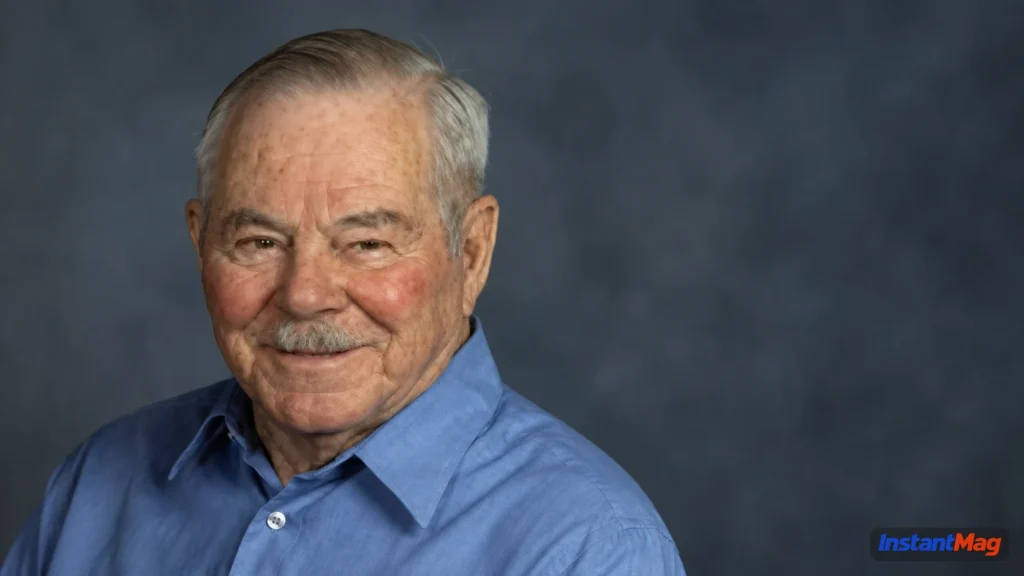

Elmer Heinrich’s net worth is not publicly verified. As of September 20, 2026, no credible public source establishes an exact figure—or a defensible numerical range—for the personal wealth of Elmer G. Heinrich, the entrepreneur and inventor associated with Liquid Assets, Exceptional Health Products and Immuno 150.
The often-repeated $75 million figure, along with estimates stretching from roughly $10 million to $80 million, comes from secondary biography and net-worth websites rather than audited financial records. Heinrich has a long, documentable business history, but the information required to turn that history into a personal net-worth calculation—company valuation, ownership percentages, personal assets and liabilities—is not publicly established.
Key takeaways
- Elmer Heinrich’s exact net worth is not publicly confirmed as of September 20, 2026.
- The frequently cited $75 million estimate is unsupported by audited or otherwise verifiable personal financial records.
- Heinrich’s career is documented through patents, business records and public appearances dating back to the 1960s.
- Exceptional Health Products identifies him as president and CEO and says the company operates as a division of Liquid Assets, Inc.
- His documented career helps explain why substantial wealth estimates circulate, but it does not establish how much of that business value belongs to him personally.
Net worth and the evidence gap
The difficulty with estimating Heinrich’s wealth is not simply that different websites give different numbers. The more important problem is that the basic financial inputs are missing.
Personal net worth is the value of what someone owns after liabilities are deducted. For a private-business owner, that normally means knowing the value of the businesses, the percentage personally owned, other investments and property, and outstanding debts.
None of those categories is sufficiently documented for Heinrich.
There is no verified public disclosure showing his percentage ownership of Liquid Assets or Exceptional Health Products. No audited company valuation has been identified. Reliable figures for his salary, distributions, investment holdings, current property portfolio and personal liabilities are also absent.
That makes it inappropriate to treat $75 million—or any broader range—as a measured estimate. A range assembled from several speculative websites does not become reliable simply because it is wider.
The distinction also matters because business revenue is not personal wealth. A company can generate sales while carrying substantial expenses or debt, and a founder or executive may own only part of the business. Patents, product prices, real estate associated with a company and historic business ventures likewise cannot simply be added together to produce a personal fortune.
The business behind Immuno 150
The clearest current evidence concerns Heinrich’s business role rather than his personal balance sheet.

The Exceptional Health Products company profile says the business is a division of Liquid Assets, Inc., incorporated in Oklahoma in 1983. It identifies Elmer Heinrich and his wife, Shirley, as principals and lists Heinrich as president and CEO.
The company markets products including SenTraMin and Immuno 150. It also says Liquid Assets opened a plant-mineral mining operation in Utah in 1986 and later developed mineral-based nutritional products.
Those statements establish the commercial context around Heinrich, but they do not disclose company revenue, profitability or enterprise value. Nor do they reveal what percentage of Liquid Assets or related entities he personally owns.
That is the central financial limitation of the story: Heinrich is publicly connected to a long-running private business, but the value of his individual stake remains unknown.
From irrigation work to invention
Heinrich’s career predates the supplement business by decades.
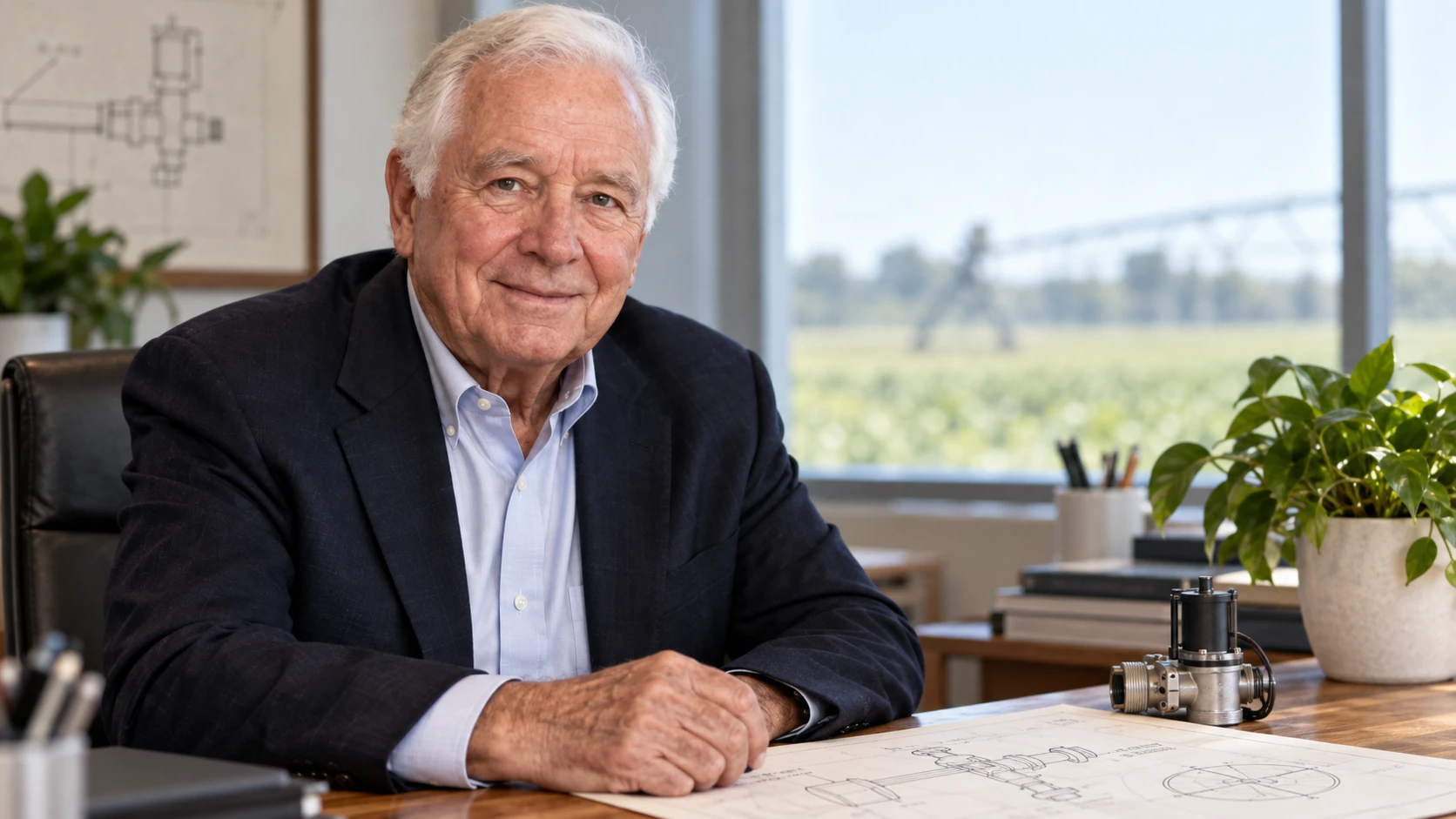
His own biography says he grew up in western Kansas as one of seven children and learned irrigation-well drilling while working for a driller during high school. He later said he and a partner bought a struggling drilling company and put its equipment back to work.
Unlike many details found on biography sites, part of that early career can be independently anchored in patent records.
A 1967 patent for a rainfall-actuated switching apparatus identifies Elmer G. Heinrich of Goodland, Kansas as the inventor. Filed on January 25, 1966, the device was designed to interrupt irrigation water flow after a predetermined amount of rainfall.
The invention was practical rather than abstract: accumulated rain shifted a weighted mechanism that activated a switch, allowing irrigation flow to stop automatically. The patent directly connects Heinrich’s name with the irrigation field he later described as an early part of his working life.
His inventor record continued into later decades. An electric clutch control was filed in 1978 and granted in 1979, with Citation Manufacturing Co. listed as the assignee. A separate water-filter patent was filed in 1987 and granted in 1988.
That sequence shows a career involving machinery, water systems and product development long before Immuno 150 became the business most closely associated with his public profile.
Pressure-washing businesses and the Hotsy dispute
Heinrich’s own biography says that after working in insurance sales, he formed a pressure-washer and steam-cleaning business that was later named The Hotsy Corporation. He says the company was sold after several years and that he remained involved in national sales for a period afterward.
That account is not fully reconciled with Hotsy’s current corporate history, which credits Bob Cohen with acquiring predecessor businesses and establishing the Hotsy name in 1970.
The two accounts could describe different stages in the development of predecessor companies, but the available evidence is not strong enough to call Heinrich the undisputed founder of Hotsy.
The distinction is worth preserving because many online biographies turn complicated company histories into clean founder narratives. In Heinrich’s case, the record supports an early connection to the pressure-washing business, but not an unqualified founder claim.
The move into minerals
The business most relevant to Heinrich’s present public identity emerged in the 1980s.

In a September 8, 2025 TBN interview, Heinrich said he was introduced to plant-derived minerals around 1982. He described initially being skeptical, then becoming involved with the product category and eventually opening a Utah mining operation in 1986.
He also linked his earlier drilling experience to that transition, saying he was able to interpret drilling logs while searching for mineral deposits.
The health claims made during that interview should not be treated as independent medical evidence. The program itself carried a disclaimer stating that product statements had not been evaluated by the FDA and that the products were not intended to diagnose, treat, cure or prevent disease.
The business chronology, however, has some independent support.
A January 1997 Tulsa Metropolitan Area Planning Commission record documented Heinrich appearing in connection with Rockland Corporation and discussing mineral material originating from a Utah mining operation and being processed in Tulsa. That municipal record is important because it independently supports a central part of the mineral-business story without relying solely on Heinrich’s promotional biography.
It still does not show what the operation was worth.
A career built across several industries
Heinrich’s public record is unusual in the number of industries it touches.
His own biography describes work in service stations, irrigation drilling, insurance, pressure-washing equipment, automatic car-wash systems, water filtration, nutritional products and mineral processing. Some of those claims are better documented than others, which is why patents and government records carry more weight than self-published career summaries.
The strongest through-line is not a single company but repeated movement between businesses that combined sales, machinery and product development.
On his own biography site, Heinrich summarized his business outlook by saying he had “trusted my instincts, worked hard and was willing to take a risk.” That statement is self-characterization rather than an independent assessment, but it fits the documented pattern of a career that repeatedly moved into new industries.
It also helps explain why later websites have been tempted to convert his long entrepreneurial history into a large personal fortune. The problem is that a career narrative is not a financial statement.
Age and early life
Heinrich’s public comments also provide a clearer picture of his background than many of the derivative biographies that appear in search results.
During the 2025 TBN interview, he said he was 91 years old, placing his birth in 1934. The program also referred to March 1934. A secondary biographical database gives March 9, 1934, but the month and year are more strongly supported than the exact day.
In the same interview, Heinrich described being born in a railroad boxcar in western Kansas and said seven children were raised there. His own biography gives the same broad account.
That background is relevant because his early drilling work later connects directly to the first independently documented invention in his name.
Current role and public activity
Heinrich remained publicly associated with his companies in 2026.
As of September 20, 2026, Exceptional Health Products continued to identify him as president and CEO. Current business listings also continued to associate him with the company.
He also appeared in a March 5, 2026 Red Eye Radio segment discussing his life story and mineral business.
That recent appearance is useful because search results contain misleading death-related material involving other men named Elmer Heinrich. One unrelated Elmer Alfred Heinrich, a Missouri farmer and former USDA worker, died in 2021, while other deceased people with the same name also appear in public records.
Those obituaries do not concern Elmer G. Heinrich of Liquid Assets and Immuno 150. A company response in September 2026 also publicly disputed reports that he had died.
The safest current-status description is therefore that Heinrich remained publicly associated with Exceptional Health Products and was appearing in media during 2026. That should not be expanded into assumptions about his day-to-day management responsibilities.
What actually explains his wealth
The documented sources of Heinrich’s economic activity are private businesses developed over a long period rather than a publicly disclosed salary, stockholding or entertainment contract.
His record includes irrigation-related work, mechanical inventions, pressure-washing and car-wash businesses, water filtration, Rockland Corporation, mineral processing, Liquid Assets and Exceptional Health Products.
Those ventures provide a reasonable explanation for why readers associate him with substantial wealth. They do not provide the figures needed to measure it.
There is no reliable basis for assigning a dollar value to his patents, determining the proceeds he retained from earlier business sales, valuing his current private-company interests or calculating his personal assets after liabilities.
That is also why claims that SEC filings reveal his investment portfolio should be treated cautiously. No subject-specific filing establishing such a portfolio was verified in the material reviewed for this profile.
Limits of the public record
Several details attached to Heinrich online should not be used in a financial profile without stronger evidence.
Claims about luxury homes, classic cars, a large investment portfolio, specific annual income, technology-company holdings or a year-by-year rise in net worth appear on secondary websites but are not backed by sufficiently reliable documentation.
The same caution applies to company-scale claims. Exceptional Health Products makes statements about international distribution and its mineral business, but sales geography is not the same thing as revenue, profit or enterprise value.
Even historical property ownership would not establish present wealth without knowing whether the assets are still owned, their current value, associated debt and how they are legally held.
The public record is therefore strong enough to establish a lengthy business and invention history, but not strong enough to turn that record into a personal balance sheet.
Conclusion
Elmer G. Heinrich’s career is far easier to document than his fortune. Patent records trace his work to irrigation technology in the 1960s, later inventions expanded into mechanical and water-treatment equipment, and public records connect him to Rockland, Liquid Assets and the mineral-products business now associated with Immuno 150.
What those records do not provide is a reliable personal net-worth figure. As of September 20, 2026, the widely circulated $75 million estimate remains unverified. The most defensible account is therefore not that Heinrich is worth a particular amount, but that his decades in private business have generated considerable wealth speculation without the financial disclosure needed to measure his personal fortune.