

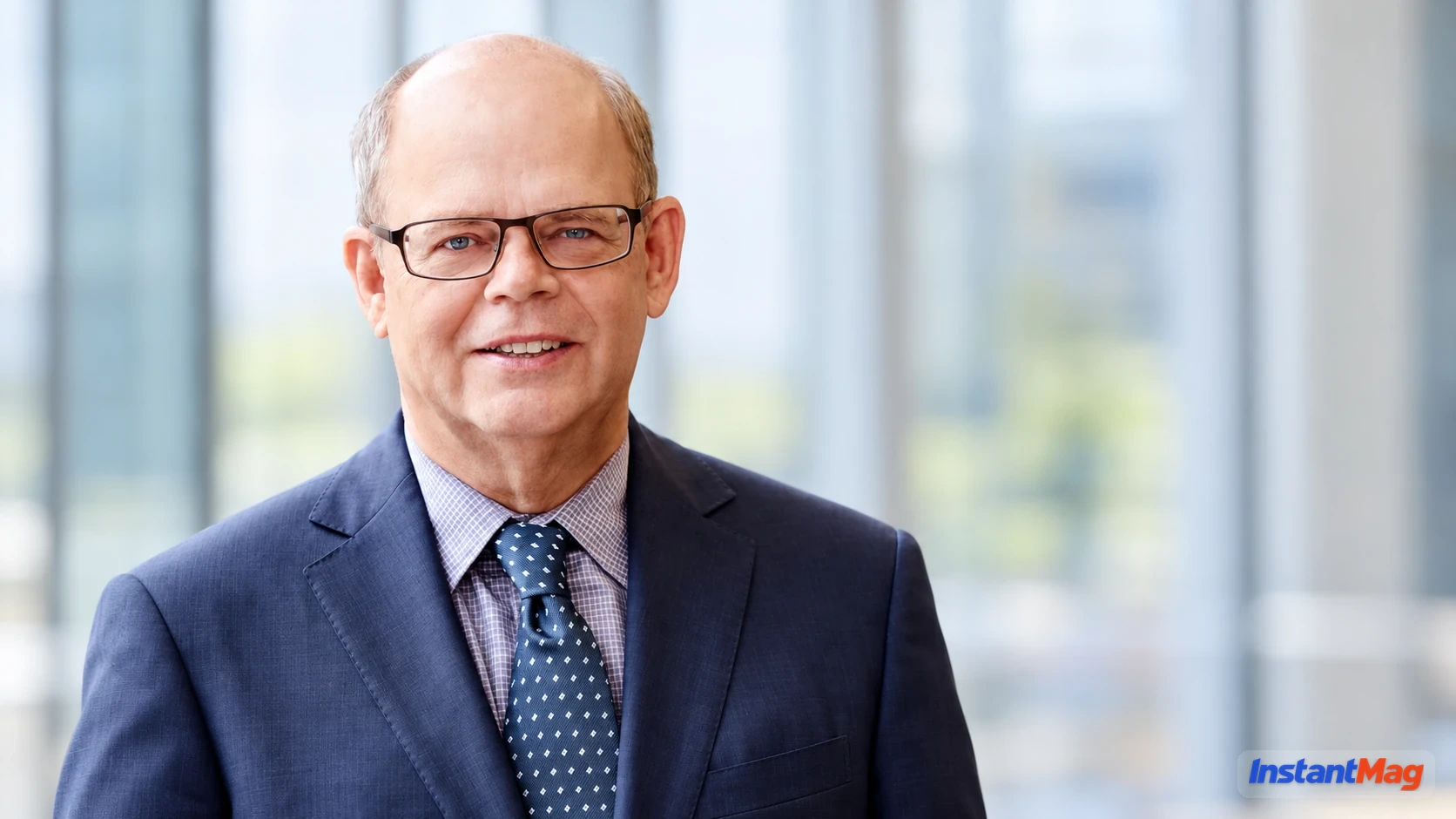
Doug Fregin is the Canadian engineer and entrepreneur who co-founded Research In Motion, the company that became BlackBerry, with Mike Lazaridis in 1984. Fregin spent more than two decades at RIM, working in hardware design and operations before leaving the company in 2007. He later returned to technology investment alongside Lazaridis and is listed, as of October 6, 2026, as a Founder and Managing Partner of Quantum Valley Investments in Waterloo, Ontario.
His public profile has always been quieter than those of Lazaridis or former BlackBerry co-CEO Jim Balsillie, but the record of Fregin’s work is substantial. Ontario securities records show that he was a RIM director from 1985 to 2007 and served first as Vice-President of Hardware Design and later as Vice-President of Operations. BlackBerry’s own investor records identify Fregin and Lazaridis as the company’s founders.
How Fregin and Mike Lazaridis started Research In Motion
Fregin’s association with Lazaridis predates RIM. In testimony to Canada’s House of Commons in 2009, Lazaridis described the origins of the company in simple terms: “I founded RIM with my friend Doug Fregin while we were still students.” The parliamentary transcript provides unusually direct evidence of both their friendship and the circumstances in which their business partnership began.
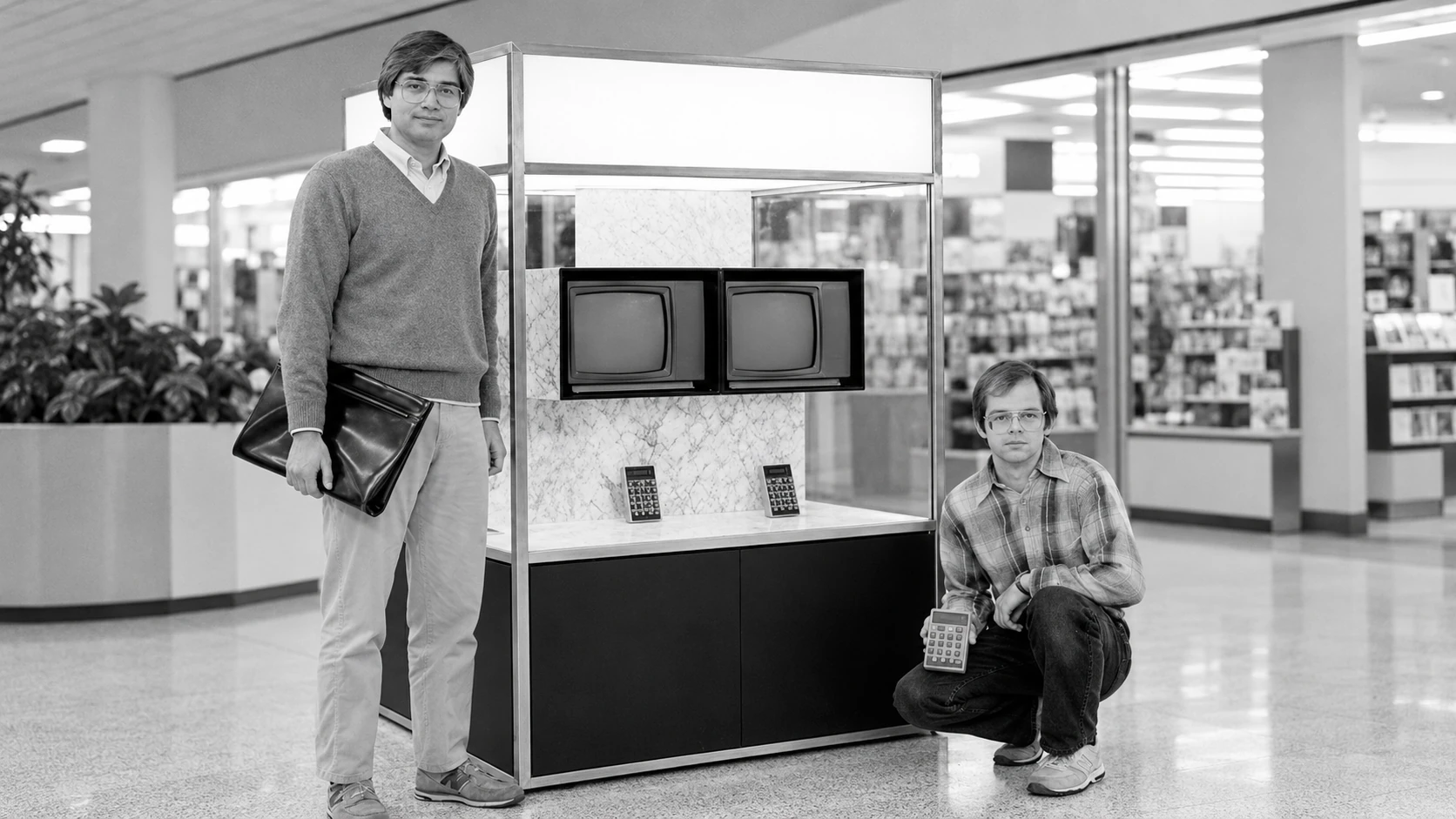
Fregin studied electrical engineering at the University of Windsor. Published accounts, including an excerpt from Jacquie McNish and Sean Silcoff’s Losing the Signal, describe Fregin and Lazaridis collaborating on technology projects before RIM, including an early video-signalling device known as the Budgie. The available record supports saying that Fregin studied at Windsor; it does not establish a completed degree, so claims that he graduated with a specific qualification should be treated cautiously. Macmillan’s excerpt from Losing the Signal provides additional background on their early collaboration.
Research In Motion was incorporated in Ontario on March 7, 1984. What began as a small technology company eventually became one of Canada’s most important technology businesses, best known for the BlackBerry wireless devices that became widely used in business and government before the rise of the modern touchscreen smartphone.
What Doug Fregin actually did at RIM
Fregin’s role was not simply that of a silent financial co-founder. Ontario Capital Markets Tribunal records identify him as a director of RIM from 1985 until 2007 and record his progression from Vice-President of Hardware Design to Vice-President of Operations.
Quantum Valley Ideas Lab’s biography of Fregin says his early work involved evaluating materials, fabrication techniques and circuit-board designs used in RIM’s wireless products. The Governor General of Canada’s honours record similarly credits him with applying printed-circuit-board and component-packaging technologies in the company’s development.
That makes his contribution more specific than the broad description “BlackBerry co-founder.” Fregin was involved in the physical and manufacturing side of early RIM technology, then moved into operations as the company expanded.
RIM went public on the Toronto Stock Exchange in October 1997. Over the following decade, BlackBerry devices became a defining product of the mobile-email era. Fregin remained on the board throughout that growth period but did not develop the same public executive profile as Lazaridis or Balsillie.
When did Doug Fregin leave BlackBerry?
Fregin left RIM in 2007. A contemporaneous RIM filing with the U.S. Securities and Exchange Commission says he advised the company that he would not stand for re-election to the board. Quantum Valley Ideas Lab later described him as having retired from RIM that year.
What is not publicly established is why he chose to leave. Claims that his departure was specifically caused by the launch of Apple’s iPhone, a stock sale or an internal disagreement go beyond what the reliable corporate record shows.
It is also misleading to describe Fregin simply as “retired” today. He retired from RIM, but his later activities show that he remained involved in technology investment and commercialization.
The 2009 RIM stock-options settlement
Fregin was among the respondents in a 2009 Ontario Securities Commission proceeding concerning historical stock-option practices at RIM. The distinction between the different individuals named in that proceeding matters.
The regulator specifically identified Jim Balsillie, Mike Lazaridis, Dennis Kavelman and Angelo Loberto in connection with the incorrect dating of option grants. Fregin’s involvement was tied to broader director oversight and disclosure issues, and he had received options that were incorrectly priced.
Under the final Ontario regulatory order, Fregin undertook that any increased benefit he had received from incorrectly priced options had been repaid. He was also required to complete an approved course concerning the duties of directors and officers.
The matter was a securities-regulatory settlement, not a criminal conviction.
What Fregin did after leaving RIM
Fregin’s most important post-BlackBerry work has again involved Mike Lazaridis.
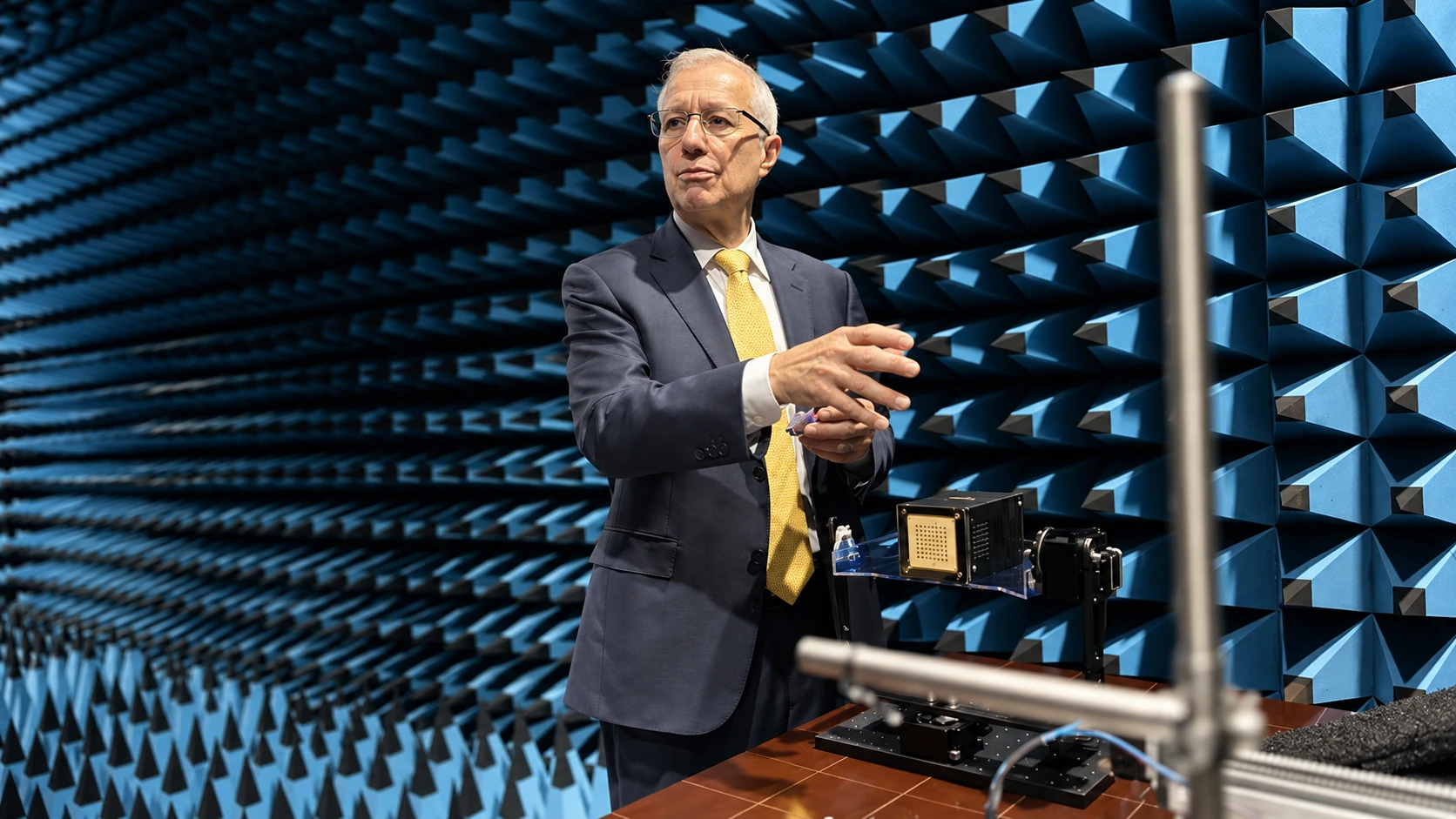
In 2013, the two established Quantum Valley Investments. According to Quantum Valley Ideas Lab, the venture began with $100 million in investment capital focused on commercializing advances in quantum information science and related technologies.
Quantum Valley Investments describes its role as helping move technologies from research into commercial applications, particularly within Waterloo’s research ecosystem. Its current leadership page lists both Lazaridis and Fregin as Founder and Managing Partner.
That same year, Fregin and Lazaridis also explored the possibility of buying BlackBerry. An October 2013 SEC Schedule 13D filing says entities associated with the two men entered an agreement to consider a joint acquisition of the BlackBerry shares they did not already own and engaged Goldman Sachs and Centerview Partners to assess their options.
The potential acquisition did not become a completed takeover, but the filing shows that Fregin remained financially and strategically connected to BlackBerry years after leaving the board.
In 2016, Fregin and Lazaridis also founded Quantum Valley Ideas Lab. Its official history says the two committed $20 million to the organization, an amount matched by Canada’s federal government. The lab focuses on developing quantum technologies with potential commercial applications.
Did Doug Fregin sell all his BlackBerry shares in 2007?
A widely repeated account says Fregin sold all his RIM shares around the time he left the company and Apple introduced the first iPhone. That version of events should not be presented as settled fact.
SEC records show that in 2013 Fregin was reported as beneficially owning 11,912,186 BlackBerry shares. A December 2013 amended Schedule 13D put that holding at approximately 2.26% of the company’s outstanding shares.
Those filings do not reconstruct every transaction between 2007 and 2013. Fregin could, in principle, have sold shares and later reacquired them. What the documents do show is that the simple story of a permanent 2007 cash-out does not capture his later disclosed ownership.
Another figure that can cause confusion is the approximately 8% stake associated with the 2013 takeover exploration. That was the combined reporting group’s interest, not Fregin’s personal stake.
How much is Doug Fregin worth?
There is no reliable current figure for Doug Fregin’s net worth.
Forbes’ profile of Douglas Fregin estimated his wealth at $1 billion as of March 1, 2010. That is useful as a historical estimate, but it does not establish his wealth in 2026.
A current net-worth figure would require up-to-date information about his assets, liabilities, private investments and subsequent share transactions. Those details are not publicly established in a form that supports a precise modern estimate. Historical BlackBerry holdings should therefore not be converted into a present-day fortune.
Awards, philanthropy and Waterloo’s technology ecosystem
Fregin has also been recognized for his contributions to Canadian technology and research.
The Governor General’s official honours registry records him as a Member of the Order of Canada. The honour was awarded on May 7, 2015, and he was invested on February 12, 2016. The citation recognizes his role in the telecommunications industry and his philanthropic support for research and education. The Governor General’s record is the authoritative source for the level of the honour; descriptions calling him an Officer of the Order of Canada are incorrect.
The University of Waterloo has also credited Fregin with substantial support for its technology and research initiatives. A 2022 university bulletin says his donations helped support the university’s nanotechnology engineering program, the Waterloo Institute for Nanotechnology and the Quantum-Nano Centre.
In June 2022, Waterloo presented Fregin for an honorary Doctor of Engineering.
Both the university and Quantum Valley Ideas Lab also credit him with a 1994 Technical Emmy connected with development of a Keycode reader involving RIM, Eastman Kodak and the National Film Board of Canada. The original award-body record is not part of the available documentation, so that attribution is best kept tied to those institutions rather than expanded into broader award claims.
Are Doug Fregin and Mike Lazaridis still connected?
Yes, professionally. Their documented relationship spans decades.
Lazaridis publicly called Fregin his friend in his 2009 parliamentary testimony. The two later established Quantum Valley Investments in 2013 and Quantum Valley Ideas Lab in 2016, and both are still listed as managing partners of QVI in 2026.
That supports describing them as longtime friends and continuing business collaborators. Their private friendship today, however, is not something public records can meaningfully measure.
What is Doug Fregin doing now?
As of October 6, 2026, Quantum Valley Investments lists Doug Fregin as a Founder and Managing Partner. The firm concentrates on quantum technology and other advanced technology businesses, particularly those connected with the Waterloo region.
His public investment activity has also extended beyond quantum technology. In February 2026, Railtown AI Technologies announced that Fregin and Lazaridis were leading a C$3.4 million private placement in the Canadian AI company. A later Railtown closing announcement said the financing closed fully subscribed on February 27.
The company did not disclose how much of that C$3.4 million Fregin personally invested, so the total should not be treated as his individual contribution.
Doug Fregin in the BlackBerry movie
Fregin re-entered wider public awareness with the 2023 film BlackBerry, in which director Matt Johnson also plays Fregin. Paramount lists the film’s premiere date as May 12, 2023.
The film should not be treated as a literal account of Fregin’s career or personality. In an Associated Press report published by Fortune, Johnson discussed changing timelines and mixing documented material with invented or composite elements. That makes the film useful as cultural context, not as a substitute for the corporate and public records of Fregin’s life.
The real Doug Fregin’s documented story is less theatrical. He helped build RIM from its early hardware years, spent more than two decades in design and operations, left the company before its sharp decline, and then continued working with Lazaridis on quantum-technology investment and commercialization in Waterloo. That post-RIM work is central to understanding what became of one of BlackBerry’s original founders.
