

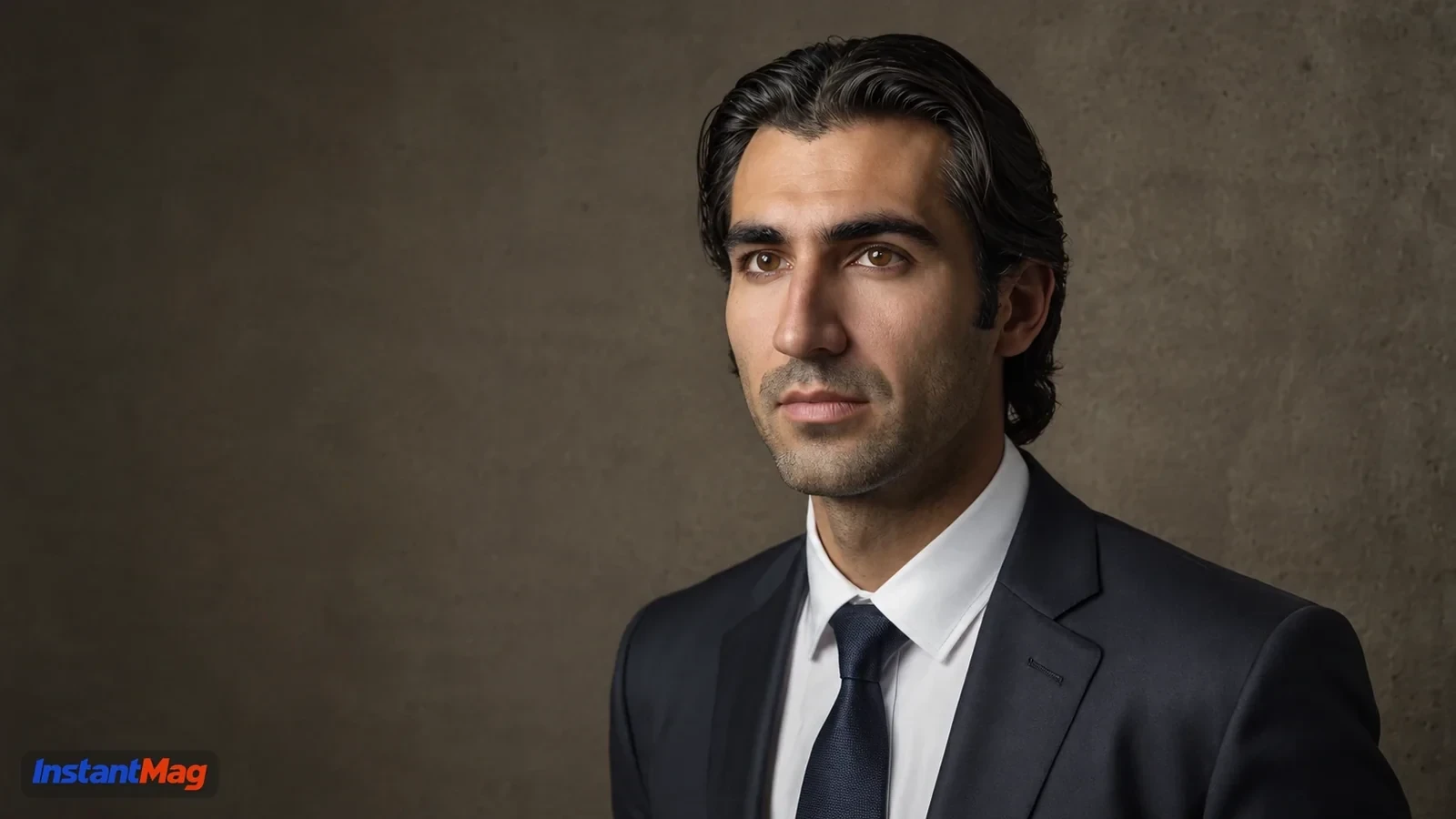
Carlos Scola Pliego was a Spanish filmmaker and the former husband of British-Nigerian singer Sade Adu. The couple married in 1989 and reportedly divorced in 1995, following an earlier separation. Scola also worked on international film productions before directing projects of his own.
Spanish publications Magnetófono and Vanitatis reported his death in October 2024, although the precise date and circumstances have not been independently confirmed. The reports contradict several later biographies that describe him as living privately or suggest that his whereabouts remain unknown.
What we know so far
- Identity: Carlos Scola Pliego was a Spanish film professional also credited as Carlos Scola.
- Marriage: Sade’s official biography confirms that they married in 1989.
- Divorce: EL PAÍS reported that their marriage legally ended in 1995, following an earlier separation.
- Film career: His documented work includes Eleni (1985), Ngira: Gorilas en la montaña (1988) and Donde termina el corazón (1989).
- Later status: Spanish publications reported his death in October 2024.
Spanish publications reported his death in 2024
The most significant development concerning Carlos Scola’s later life emerged in October 2024, when Spanish entertainment and music publications reported his death.
The Spanish outlet Vanitatis published a death report identifying Scola as a filmmaker and Sade’s former husband. The music publication Magnetófono also referred to his death in an October 2024 article about Sade’s album Diamond Life.
A public memorial statement attributed to writer Sara Juana Pastor Cot provided another acknowledgement. She mourned Carlos and thanked him for having presented her novel, Martina, Dama de Picas.
These accounts establish that his death was publicly reported in Spain. However, the exact date and circumstances should not be presented as independently certified.
The distinction matters because several biographies published after October 2024 continued to describe Scola as someone whose present location was unknown.
Some suggested that he remained in Spain, living quietly after his divorce.
Those descriptions do not account for the earlier death reports. As of November 2026, the appropriate description of his later status is that his death was reported in October 2024, rather than that he is currently living privately.
His background was rooted in Spanish filmmaking
Carlos Scola Pliego was associated with Madrid’s audiovisual industry and worked on productions involving Spanish and international crews.
Sade’s official biography identifies him by his full name and describes him as a Spanish film director.
His professional credits frequently use the shorter name Carlos Scola. The full name also appears in film-credit records associated with the television miniseries Christopher Columbus.
Although Scola is regularly described as Madrid-born, his precise birthplace and date of birth are not firmly established in authoritative biographical records.
The same applies to detailed accounts of his childhood and education.
His professional history is considerably clearer. By the mid-1980s, he was working within the film industry in supporting production roles.
That background is important to understanding his relationship with Sade. His connection with the singer developed when he already had experience in filmmaking, rather than through a career established after their marriage.
His work on international productions came before directing
One of Carlos Scola’s clearest film credits appears in Eleni, the 1985 drama directed by Peter Yates.
The American Film Institute’s catalogue identifies Carlos Scola as an assistant director on the Spanish crew.
The production involved filming in Spain during 1984, before the film’s release the following year.
An assistant director helps organise the practical work of filmmaking. Depending on the production, responsibilities can include coordinating schedules, arranging filming activities and helping departments work together efficiently.
This is different from serving as the film’s principal director.
In Eleni, that distinction is particularly important. Peter Yates directed the film, while Scola held a supporting responsibility within its Spanish production operation.
The credit establishes that he contributed to an identifiable international production without overstating his role.
Another production associated with Scola was Christopher Columbus, the 1985 television miniseries.
Film-credit records identify Carlos Scola Pliego as an assistant director for Spain. The use of his full name helps connect the professional record with the filmmaker identified in Sade’s biography.
These projects illustrate the kind of work he was undertaking before his marriage became part of his public identity.
They also provide a useful distinction between his experience assisting other directors and the projects on which he later held directing responsibility.
Documentary projects established his independent directing work
By the late 1980s, Carlos Scola had credits extending beyond assistant directing.
Two productions are particularly relevant to his career: Ngira: Gorilas en la montaña and Donde termina el corazón.
Ngira: Gorilas en la montaña (1988)
Spanish film-catalogue material identifies Scola as a co-director of Ngira: Gorilas en la montaña, a short film released in 1988.
The project concerned documentary filmmaking associated with gorillas.
Its subject is described somewhat differently across film references. Some classify it as a documentary, while the Spanish film catalogue’s description concerns events surrounding the filming of a gorilla documentary.
The important professional distinction is clear: Scola held a directing credit on the production.
That responsibility differed from his earlier work assisting directors on larger international projects.
Co-directing involves sharing responsibility for the film’s creative direction, although the precise division of responsibilities between collaborators cannot be determined from a credit alone.
Ngira therefore provides a documented example of Scola’s participation in directing a film rather than simply supporting its production.
Donde termina el corazón (1989)
Scola also directed Donde termina el corazón, a documentary associated with 1989.
The Spanish title translates approximately as Where the Heart Ends.
The film examined social conditions in African settings, according to academic research on Spanish documentary cinema.
A 2016 doctoral dissertation by Juan Caravaca Mompeán at Universidad Rey Juan Carlos discusses the production and its approach to documentary storytelling.
The researcher examined the film’s treatment of social circumstances and offered a critical assessment of its structure.
That academic discussion establishes that Donde termina el corazón has a place in the historical study of Spanish documentary filmmaking.
It does not, however, establish major commercial success or widespread critical recognition.
The dissertation also found no clear evidence of a commercial theatrical release. That observation should not be taken to mean the film was never screened or distributed through another channel.
Together, Ngira and Donde termina el corazón document a period when Scola was undertaking his own directing work.
Both projects preceded or coincided with his 1989 marriage to Sade.
His relationship with Sade developed during her Madrid years
Carlos Scola Pliego’s connection with Sade emerged during the 1980s, when she was becoming internationally recognised.
Born Helen Folasade Adu, the singer achieved major success with her band’s debut album, Diamond Life, released in 1984.
The album included songs such as Smooth Operator and Your Love Is King.
Her second album, Promise, followed in 1985.
According to EL PAÍS’s account of Sade’s years in Madrid, Scola worked as an assistant director on music videos associated with Promise.
The newspaper describes this professional connection as preceding their romantic relationship.
It also reports that Sade subsequently spent time in Madrid, where she reconnected with the filmmaker.
The account places their developing relationship within a period when Sade was balancing an international recording career with time spent in Spain.
Although their connection through music-video production is documented in retrospective reporting, the precise circumstances of their first personal meeting have not been established.
The professional association remains the clearest explanation of how their lives came to overlap.
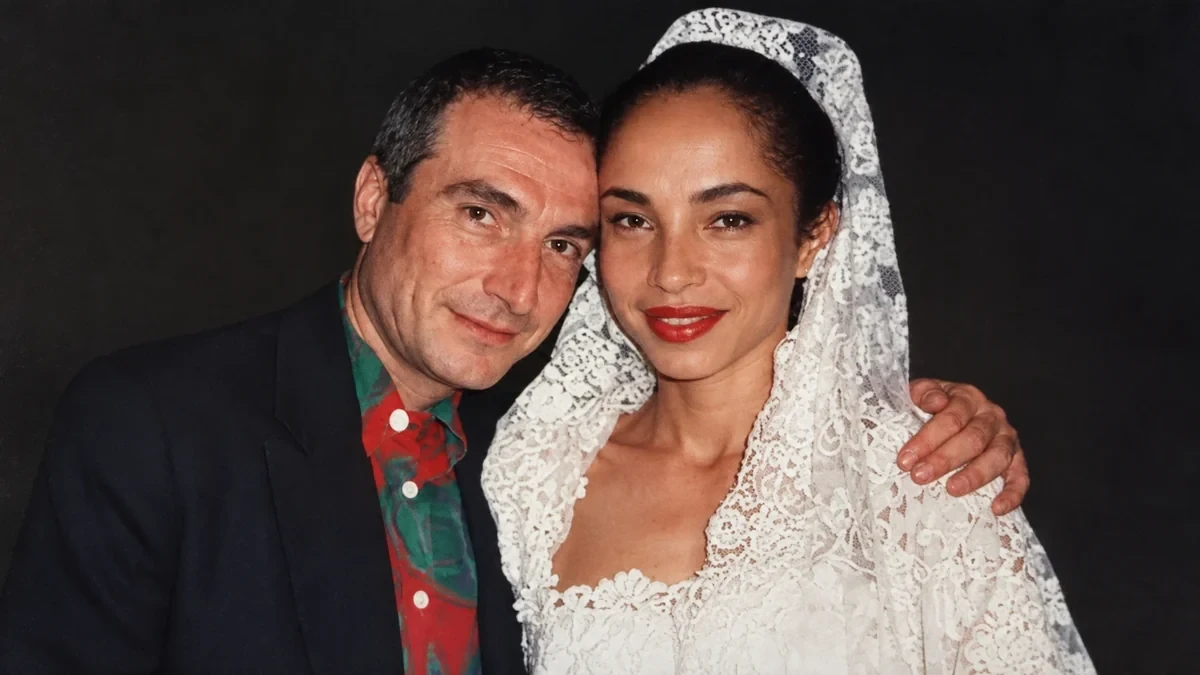
Carlos Scola Pliego and Sade married in 1989
Carlos Scola Pliego and Sade married in Spain in 1989, according to Sade’s official biography.
The marriage took place during a period when the singer was already internationally successful and Scola was working in film production and directing.
However, published accounts disagree about the exact wedding date.
A contemporary report in the 20 October 1989 edition of the American music-industry publication Radio & Records identified 11 October 1989 as the date of the ceremony.
The report placed the wedding outside Madrid.
EL PAÍS also identifies October 1989 as the month in which the couple married.
A conflicting date appears in later references.
A retrospective Radio & Records entry published in 1993 gives 11 February 1989, a date also repeated in IMDb material.
The October account carries particular weight because it appeared shortly after the reported wedding, while the February entry was published several years later.
Consequently, 11 October is the better-supported reported date, although the precise date has not been independently established through a civil marriage document.
Accounts also describe a ceremony at a Spanish castle. The exact venue is less securely documented, so the most dependable geographical description remains Spain, outside Madrid.
The couple separated before their reported 1995 divorce
Carlos Scola and Sade’s relationship ended in separation before their marriage was legally dissolved.
EL PAÍS reports that Sade returned to London approximately a year after the wedding.
The same newspaper identifies 1995 as the year their divorce was finalised.
This distinction explains why accounts of the marriage can appear contradictory.
The couple were reportedly legally married for several years after they stopped living together as partners.
A marriage date and a divorce date establish the legal period of a relationship. They do not necessarily establish how long a couple remained together.
The reasons for their separation have not been publicly explained in sufficient detail to support a definitive account.
Sade later discussed the emotional impact
Sade addressed the breakup in an interview with writer Ekow Eshun originally published in 2000 and subsequently republished by The FADER in 2015.
She described the experience as deeply upsetting and said its effects continued for years.
Her comments provide a firsthand account of her emotional experience.
They do not establish a specific cause of the breakup or provide Carlos’s perspective on the relationship.
The separation is therefore best understood through its documented chronology and Sade’s attributed recollections, without assigning responsibility or inventing private circumstances.
The marriage should not be confused with Sade’s later family life
Carlos Scola Pliego is widely identified as Sade’s former husband, but their marriage represents one period of the singer’s personal history.
No children from their marriage are established in the available biographical record.
That statement does not establish Scola’s complete family history or support claims about other possible relationships.
Sade’s later personal relationships are separate from her marriage to the Spanish filmmaker.
Some entertainment biographies associate her subsequent life with Ian Watts, but those historical references do not establish her current relationship status.
Similarly, information concerning her later family members or residence should not be treated as part of Scola’s biography.
The documented relationship between the two remains their marriage in 1989, their subsequent separation and their reported divorce in 1995.
His influence on Sade’s music remains a matter of interpretation
The end of Sade’s relationship with Carlos has sometimes been connected to the emotional themes in her music.
Her 1992 album Love Deluxe was released during the period between the couple’s separation and reported divorce.
However, the fact that an album explores love and emotional difficulty does not establish that its songs concern a particular person.
Sade’s interview comments confirm that the breakup affected her personally.
They do not definitively identify Carlos as the subject of a particular recording or establish that he inspired an entire album.
His documented professional connection with her music concerns the video-production work described by EL PAÍS.
That connection should remain separate from unconfirmed interpretations of her songwriting.
His later public profile remained limited
Following the reported divorce, Carlos Scola appeared less frequently in English-language entertainment coverage.
His historical film credits continued to provide identifiable information about his professional life, but detailed accounts of his subsequent activities were limited.
There is no firm basis for concluding that he deliberately withdrew from the public eye or abandoned filmmaking.
Equally, a lack of extensive later publicity does not establish where he lived or what work he undertook during every subsequent year.
The October 2024 death reporting is therefore an important part of his later biography.
It provides a substantive development that should not be replaced by assumptions about a secluded lifestyle.
The Bottom Line
Carlos Scola Pliego’s public history rests on two well-documented connections: his marriage to Sade Adu in 1989 and his work in Spanish and international filmmaking. His credits on Eleni, Ngira: Gorilas en la montaña and Donde termina el corazón establish a professional career independent of that relationship. Spanish publications reported his death in October 2024, and that dated reporting provides the most responsible account of his later status, pending independent confirmation of the precise date and circumstances.
More from instantmag.co.uk.
