

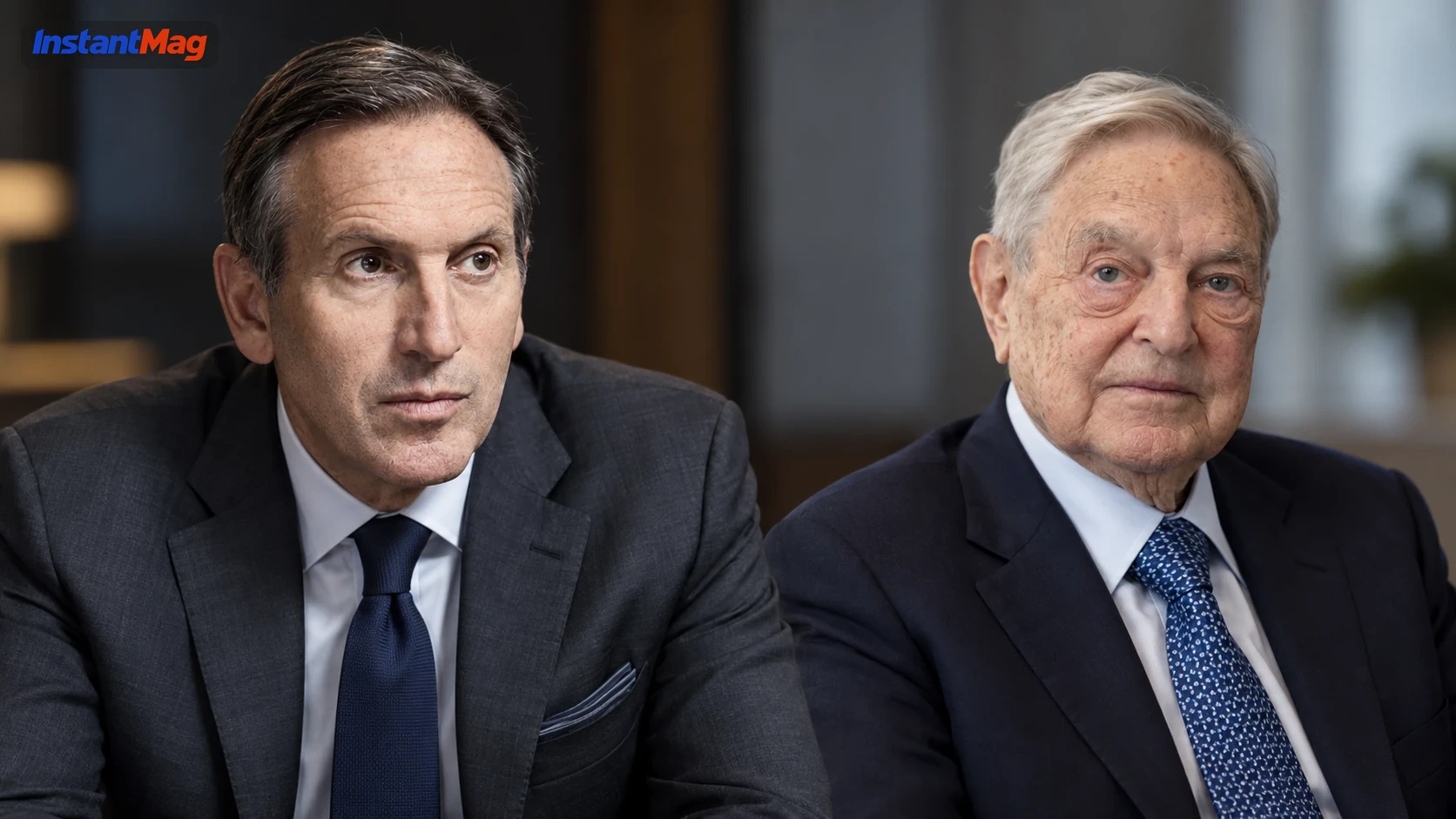
Howard Schultz and George Soros have two documented connections through American business and politics, but they are not known to be business partners, relatives, or close personal associates. In 2013, both were publicly identified as critics of activist investor Bill Ackman during a leadership dispute at J.C. Penney. Six years later, a political organization funded partly by Soros conducted opposition research on Schultz and filed a federal election complaint concerning his possible presidential campaign.
The second connection attracted particular attention because Schultz was considering running as an independent in the 2020 US presidential election. However, George Soros did not personally file the complaint, and there is no established evidence that he directed the organization to target Schultz. The Federal Election Commission (FEC) ultimately dismissed the allegation against Schultz in November 2021.
Key takeaways
- Two documented intersections: Howard Schultz and George Soros appeared on the same side of the 2013 J.C. Penney leadership dispute, while a Soros-supported political committee opposed Schultz’s potential presidential candidacy in 2019.
- Historical financial connection: An April 2013 SEC filing disclosed Soros-related beneficial ownership of approximately 7.91% of J.C. Penney’s shares. Schultz’s connection to the dispute involved J.C. Penney CEO Mike Ullman, who also served on Starbucks’ board.
- Political funding: Soros contributed $2 million to American Bridge during the 2016 election cycle, according to FactCheck.org. The organization subsequently investigated Schultz in 2019.
- Federal complaint dismissed: American Bridge filed a complaint alleging that Schultz had failed to meet presidential candidate registration requirements. The FEC dismissed the allegation by a 6–0 vote on November 9, 2021.
- Different professional careers: Schultz built his public career through Starbucks and business philanthropy, while Soros became known for investment management, international philanthropy, and political donations.
Howard Schultz and George Soros profile summary
| Field | Howard Schultz | George Soros |
|---|---|---|
| Public identity | American businessman and former Starbucks CEO | Hungarian-born American investor and philanthropist |
| Best known for | Developing Starbucks into an international coffeehouse business | Investment management and founding the Open Society Foundations |
| Major organization | Starbucks | Soros Fund Management |
| Philanthropic association | Schultz Family Foundation | Open Society Foundations |
| Relevant business connection | Supported Mike Ullman during the 2013 J.C. Penney dispute | Soros-related investment entities disclosed a J.C. Penney shareholding in 2013 |
| Relevant political connection | Explored an independent presidential campaign in 2019 | Previously donated to American Bridge, which challenged Schultz’s campaign-related activities |
| Public status as of October 10, 2026 | Starbucks chairman emeritus and foundation co-founder | Open Society Foundations founder |
The 2013 J.C. Penney dispute that brought their names together
The earlier connection between Schultz and Soros emerged during a difficult period for American retailer J.C. Penney.
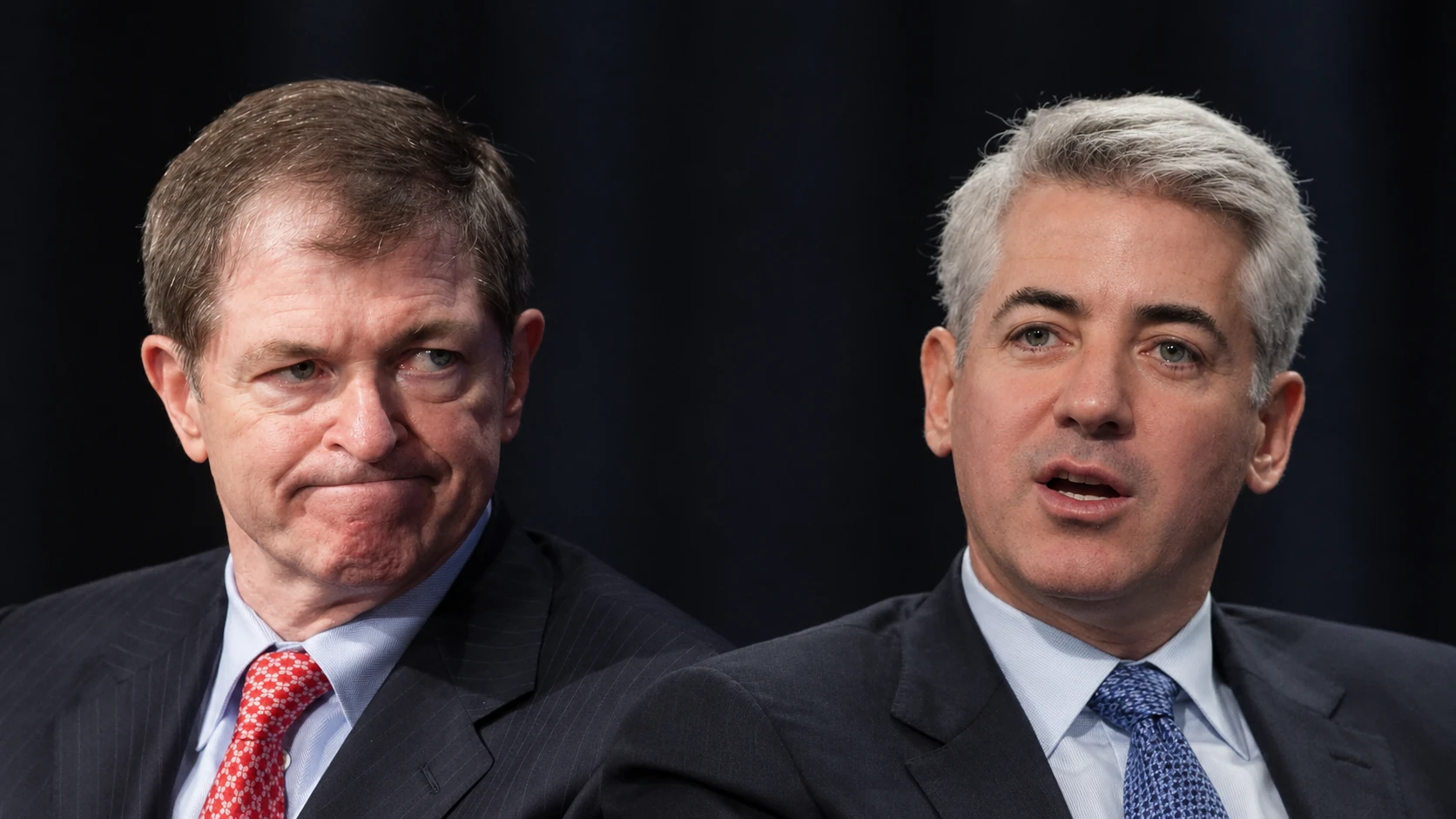
In 2013, the department-store company was dealing with declining business performance and disagreements over its leadership. Activist investor Bill Ackman, whose Pershing Square Capital Management held a substantial investment in the retailer, was pressing for changes.
A central figure in the confrontation was Myron E. “Mike” Ullman III, who had returned as J.C. Penney’s chief executive in April 2013.
Ullman also had an established professional relationship with Starbucks. The company’s 2013 proxy statement identified him as a director.
That connection helps explain why Howard Schultz, whose primary business was coffee retailing rather than department stores, became publicly involved in the dispute.
Soros had a documented financial interest in J.C. Penney
George Soros entered the story through investment management.
An April 2013 filing with the US Securities and Exchange Commission disclosed beneficial ownership of 17,386,361 J.C. Penney shares, representing approximately 7.91% of the company’s outstanding shares.
The filing identified Soros Fund Management, George Soros, and Robert Soros as reporting persons associated with the investment. The underlying shares were held for Quantum Partners LP.
These were overlapping beneficial-ownership disclosures concerning the same investment position, rather than three separate holdings of 17.4 million shares.
The filing establishes the investment position reported in April 2013. It should not be interpreted as confirming that precisely the same number of shares remained held when the leadership controversy intensified in August.
Nevertheless, it provides an identifiable financial reason for Soros-associated investment interests to follow J.C. Penney’s leadership decisions.
Schultz and Soros were both reported as critics of Ackman
By August 2013, Ackman’s disagreements with J.C. Penney’s leadership had become public.
A CNN Quest Means Business broadcast on August 13, 2013 identified both Howard Schultz and George Soros as critics of Ackman’s position in the dispute.
CNN reported that Schultz had strongly criticized Ackman’s effort to remove Ullman. Soros, meanwhile, was identified as supporting Ullman’s continued leadership.
Contemporary investment reporting also described Soros Fund Management as supporting Ullman and J.C. Penney chairman Thomas Engibous.
The two men’s connections to the company were different. Soros-associated entities had a disclosed investment interest, while Schultz’s professional connection ran through Ullman’s directorship at Starbucks.
On August 13, J.C. Penney announced that Ackman had resigned from its board, effective August 12. The company reaffirmed its support for Ullman and Engibous.
The company’s official announcement documents the resignation and leadership position.
Neither the announcement nor the contemporary reporting establishes that Schultz and Soros coordinated their actions or caused Ackman’s departure.
Their involvement is best understood as two public figures taking compatible positions during the same corporate leadership controversy, for different documented professional and financial reasons.
How American Bridge connected them politically in 2019
Six years after the J.C. Penney dispute, Schultz and Soros became indirectly connected through American electoral politics.
This episode involved American Bridge 21st Century, a Democratic-aligned super political action committee associated with opposition research.
Opposition research involves collecting information about a political figure’s public record, professional history, statements, and other activities that may be used in campaigning.
American Bridge had received substantial financial support from Soros before Schultz entered the 2019 presidential conversation.
According to FactCheck.org’s April 2018 analysis, Soros contributed $2 million during the 2016 election cycle.
His support continued afterward.
An FEC disclosure records an $80,000 contribution on May 18, 2017. FactCheck.org subsequently reported another $300,000 contribution in February 2018.
Those later donations amounted to $380,000 across 2017 and 2018, rather than $380,000 donated exclusively in 2018.
The funding history matters because it establishes a genuine financial relationship between Soros and American Bridge before the organization began examining Schultz.
However, political donors and political committees are separate actors. A donation establishes financial support for an organization; it does not automatically establish that the donor directed a particular investigation or complaint.
Why Schultz’s presidential ambitions attracted opposition
On January 27, 2019, Schultz appeared on CBS’s 60 Minutes and announced that he was seriously considering an independent campaign for the 2020 US presidency.
He presented himself as a centrist independent, distancing his proposed political approach from both major parties.
For Democrats, the possibility of an independent candidate with Schultz’s business profile raised concerns about the general election.
Some Democratic strategists and donors feared that Schultz could attract voters who otherwise might support the eventual Democratic nominee, potentially benefiting then-President Donald Trump.
That was a prediction about a possible campaign, not an established electoral outcome.
Schultz had not formally launched a presidential campaign, and the effect of such a candidacy could not be known in advance.
Nevertheless, Democratic-aligned political organizations began examining his background.
On January 31, 2019, Axios reported that Priorities USA Action, a separate Democratic super PAC, was seeking government records concerning Schultz.
Meanwhile, American Bridge was developing its own research.
On February 1, The Daily Beast reported that American Bridge had assembled opposition-research material concerning Schultz and the Schultz Family Foundation.
The organization was scrutinizing his business record as he considered entering national politics.
American Bridge publicly challenged Schultz’s business record
The dispute became more visible on February 4, 2019.
In original reporting by CNBC, journalist Brian Schwartz described how American Bridge was distributing research focused on Starbucks’ history of employee-related lawsuits and settlements.
The committee claimed Starbucks had paid approximately $46 million in employee-related settlements across cases included in its research.
That figure was part of the political organization’s argument against Schultz. It should not be interpreted as a finding that Schultz personally committed wrongdoing or was responsible for every settlement.
CNBC noted that some of the cases occurred during periods when Schultz was not serving as Starbucks CEO or chairman.
The report also included responses from Schultz’s spokesman, Tucker Warren, and Starbucks.
Warren criticized American Bridge’s tactics as an example of the political attacks Schultz had argued were damaging American politics.
Starbucks, meanwhile, emphasized that it did not participate in national political campaigns and pointed to its employee benefits and hiring practices.
The episode shows how Schultz’s potential candidacy drew his corporate leadership record into political debate.
Although Soros was identified among American Bridge’s financial supporters, CNBC did not establish that he personally commissioned the research.
The FEC complaint and its eventual dismissal
American Bridge’s opposition activity went beyond public criticism.
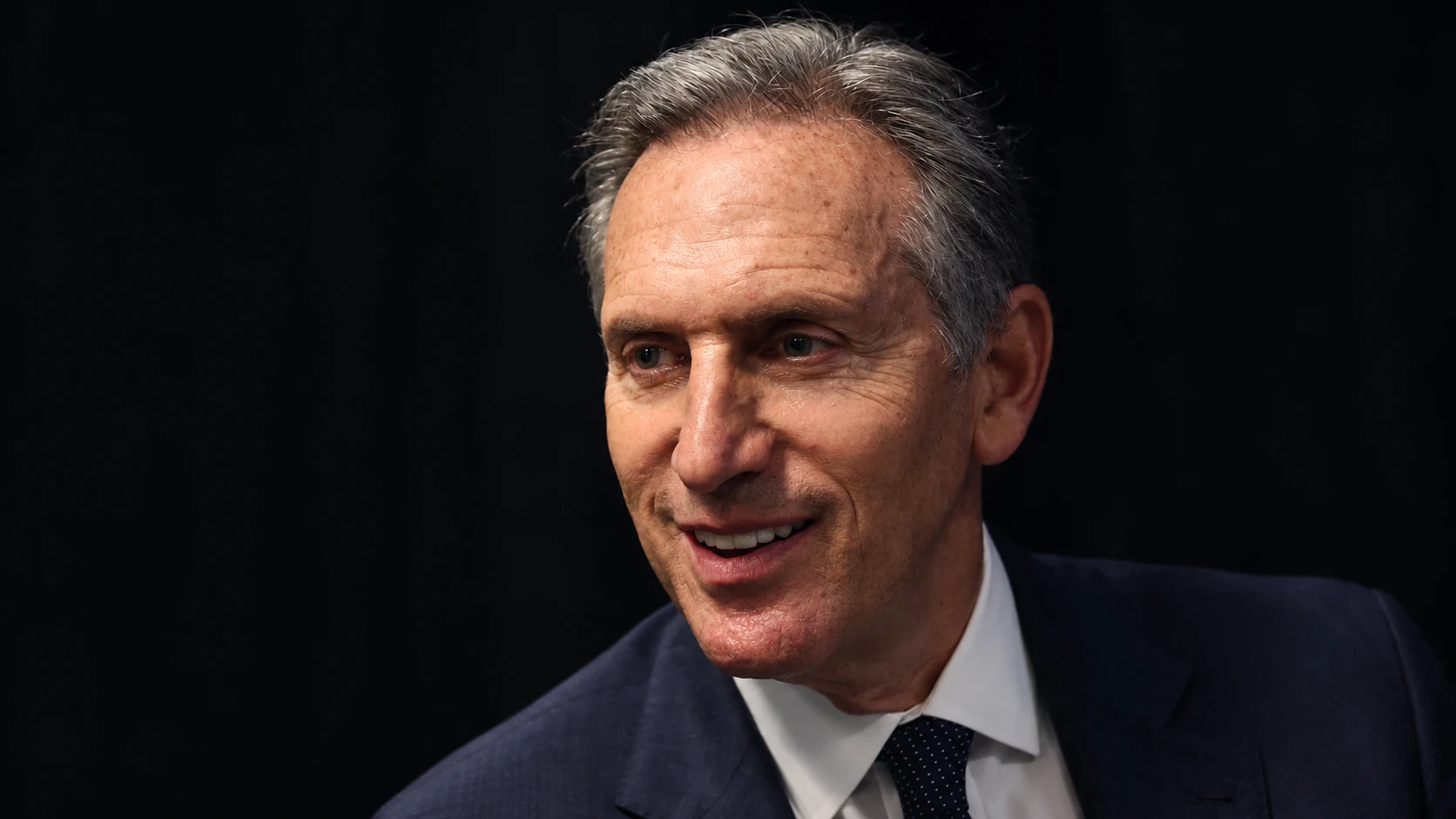
In February 2019, the organization and its official Bradley Beychok submitted a complaint to the Federal Election Commission concerning Schultz’s possible presidential campaign.
The complaint became Matter Under Review 7567.
The original complaint was signed on February 7 and received by the FEC on February 14, 2019.
It alleged that Schultz had moved beyond simply exploring whether to run for president and had undertaken activities requiring federal candidate registration and financial reporting.
The central issue was the distinction between “testing the waters” and becoming a presidential candidate.
Federal campaign-finance rules permit certain exploratory activities while an individual decides whether to seek office. These can include consulting advisers, conducting polling, and assessing potential voter support.
However, activities demonstrating that an individual has decided to become a candidate may trigger formal reporting obligations.
American Bridge argued that Schultz’s use of political consultants, polling, and preparations for advertising showed he had crossed that boundary.
The complaint was an allegation about campaign-finance compliance. Its filing did not establish that Schultz had violated federal law.
Schultz disputed the allegation
On April 12, 2019, attorneys Lawrence H. Norton and Meredith K. McCoy submitted a formal response on Schultz’s behalf.
The response maintained that Schultz was evaluating a possible campaign rather than conducting one.
His attorneys argued that activities such as hiring consultants and commissioning polling could fall within permissible exploratory work.
That distinction was central to the case because Schultz had publicly expressed interest in a campaign without formally declaring himself a presidential candidate.
The competing positions concerned how his documented preparations should be classified under election law.
George Soros was not identified as a complainant in the FEC proceedings. The named complainants were American Bridge, subsequently known as AB PAC, and Bradley Beychok.
Schultz abandoned his presidential plans
On September 6, 2019, Schultz announced that he would not pursue an independent presidential campaign.
As ABC News reported at the time, his public explanation included concerns about the consequences an independent candidacy might have for the Democratic nominee.
His announcement ended an exploratory political effort that had drawn considerable attention during the early stages of the 2020 election cycle.
It did not establish that American Bridge, Soros, or any particular political donor caused him to withdraw.
The commission voted to dismiss the case
The federal complaint remained part of the regulatory process after Schultz abandoned his plans.
In December 2019, the FEC’s General Counsel recommended dismissing the allegation.
The commissioners ultimately considered the matter on November 9, 2021.
According to the FEC’s official case record, commissioners initially divided 3–3 on two proposed dispositions involving different legal analyses.
They subsequently voted 6–0 to dismiss the allegation and close the matter.
The commissioners later published separate explanations of their positions.
This distinction is significant. The commission unanimously agreed on dismissal, but it did not adopt one common, detailed factual and legal rationale.
The established outcome is that the complaint ended without an FEC finding that Schultz had committed the alleged campaign-finance violation.
How their business careers developed
The two public figures entered the J.C. Penney and American Bridge stories with very different professional backgrounds.
Howard Schultz built Starbucks around a coffeehouse model
Howard Schultz grew up in Brooklyn, New York, and became the first member of his family to graduate from college, according to the Schultz Family Foundation.
He joined Starbucks in 1982, when the Seattle business was primarily associated with selling coffee beans and related products.
A visit to Italy in 1983 helped shape his interest in espresso bars as social spaces.
Schultz believed a similar coffeehouse model could work in the United States. Starbucks’ original owners, however, preferred the company’s existing retail approach.
He eventually left and established Il Giornale in 1985.
Two years later, Il Giornale raised $3.8 million and acquired Starbucks’ assets, including its name and existing Seattle operations.
As Starbucks’ historical account explains, the acquisition transformed Schultz’s separate business into the company that subsequently expanded under the Starbucks name.
That is why Schultz is often described as Starbucks’ modern-day founder, although the original business began in 1971.
Starbucks became publicly traded in 1992 and expanded internationally during Schultz’s leadership.
His career also included repeated transitions in and out of executive responsibility.
He stepped away from the CEO position in 2000, returned in 2008, and handed leadership to Kevin Johnson in 2017.
A detailed 2017 Fortune profile described his work developing Starbucks’ higher-end Reserve and Roastery businesses during that transition.
Those projects reflected his continued involvement in the company’s retail experience while Johnson took responsibility for its daily operations.
Schultz later returned as interim CEO in 2022, concluded that tenure in March 2023, and departed the company’s board in September 2023.
George Soros built his career through investing and philanthropy
George Soros followed a different professional path.
Born in Budapest in 1930, he survived Nazi-occupied Hungary and moved to London in 1947.
He studied at the London School of Economics, where the ideas of philosopher Karl Popper influenced his thinking.
Soros moved to the United States in 1956 and developed his career in financial markets.
According to the Open Society Foundations’ official biography, he established his own hedge fund in 1970.
He subsequently became a prominent international investor.
In 1979, Soros began his philanthropic activities by supporting scholarships for Black South Africans living under apartheid.
His work later expanded into Eastern Europe and other regions, developing into the Open Society Foundations network.
The organization describes its mission as supporting human rights, justice, and open societies internationally.
Soros has also made substantial political donations in the United States, particularly to Democratic-aligned organizations.
Those donations are distinct from the work of the Open Society Foundations and from the investment activities of Soros Fund Management.
That distinction is especially relevant to his indirect connection with Schultz: the 2019 American Bridge episode involved a political committee supported by Soros, rather than a joint business project or philanthropic initiative involving both men.
Their public roles in 2026
As of October 10, 2026, Howard Schultz is no longer Starbucks’ chief executive or a member of its board.
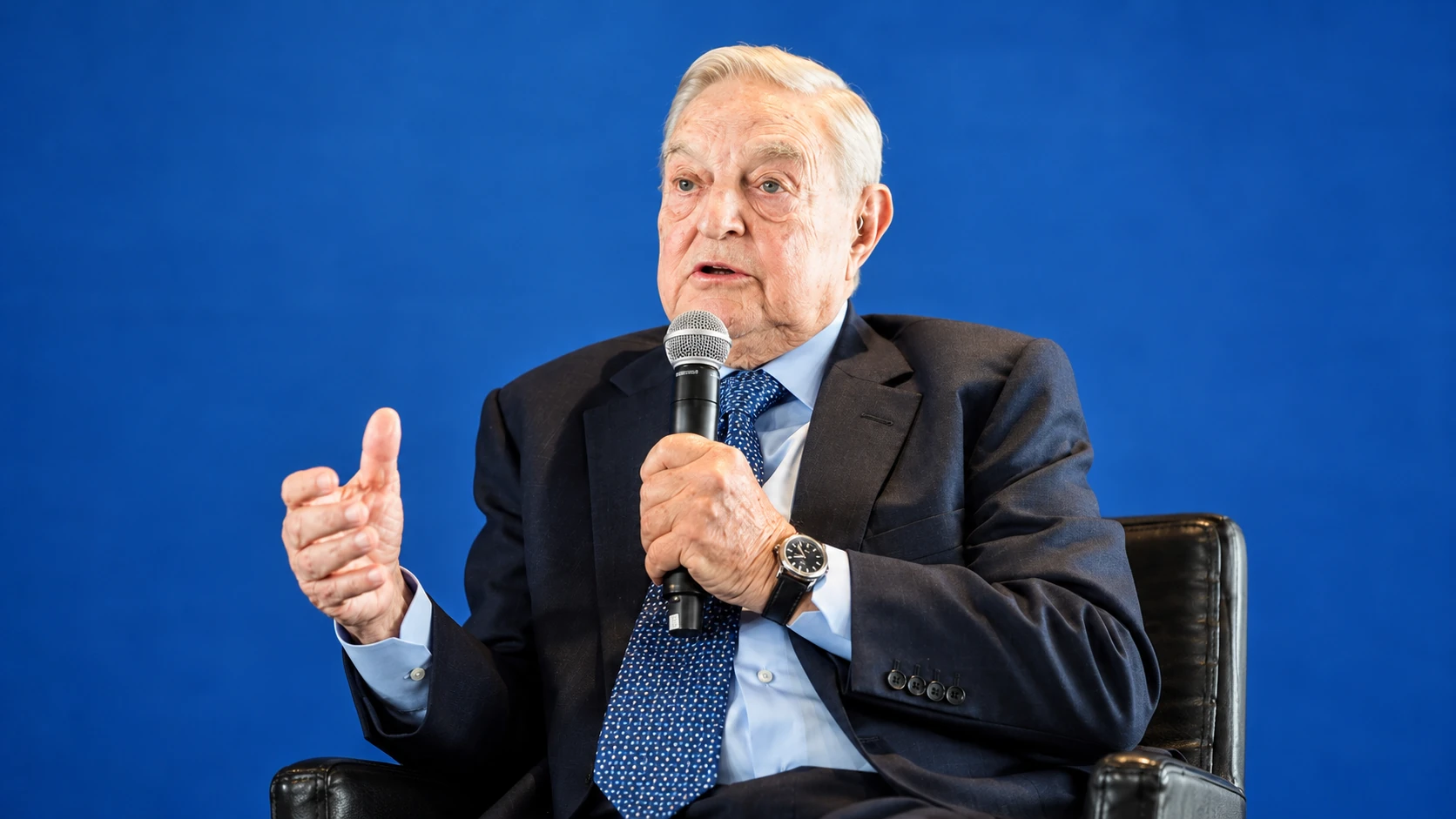
Following his September 2023 departure, Starbucks recognized him with the honorary title of chairman emeritus.
He also remains publicly associated with the Schultz Family Foundation, which he co-founded with his wife, Sheri Schultz.
The foundation’s work includes initiatives focused on expanding economic and social opportunities.
George Soros remains identified as the founder of the Open Society Foundations.
The organization’s current leadership information identifies Alex Soros as board chair, distinguishing George Soros’s founding role from its present governance.
Their public activities therefore remain associated with separate organizations and areas of work.
The historical relationship between Howard Schultz and George Soros is best understood through the specific events that connected their names: parallel positions in a 2013 corporate leadership dispute and an indirect political connection through American Bridge in 2019.
The first involved J.C. Penney’s leadership and a disclosed investment interest. The second involved political donations, opposition research, and a federal election complaint that was ultimately dismissed.
Neither episode establishes a personal partnership or coordinated action between the two men. Their documented connections are real, but considerably narrower than claims that they worked together or that Soros personally directed the political challenge against Schultz.
