

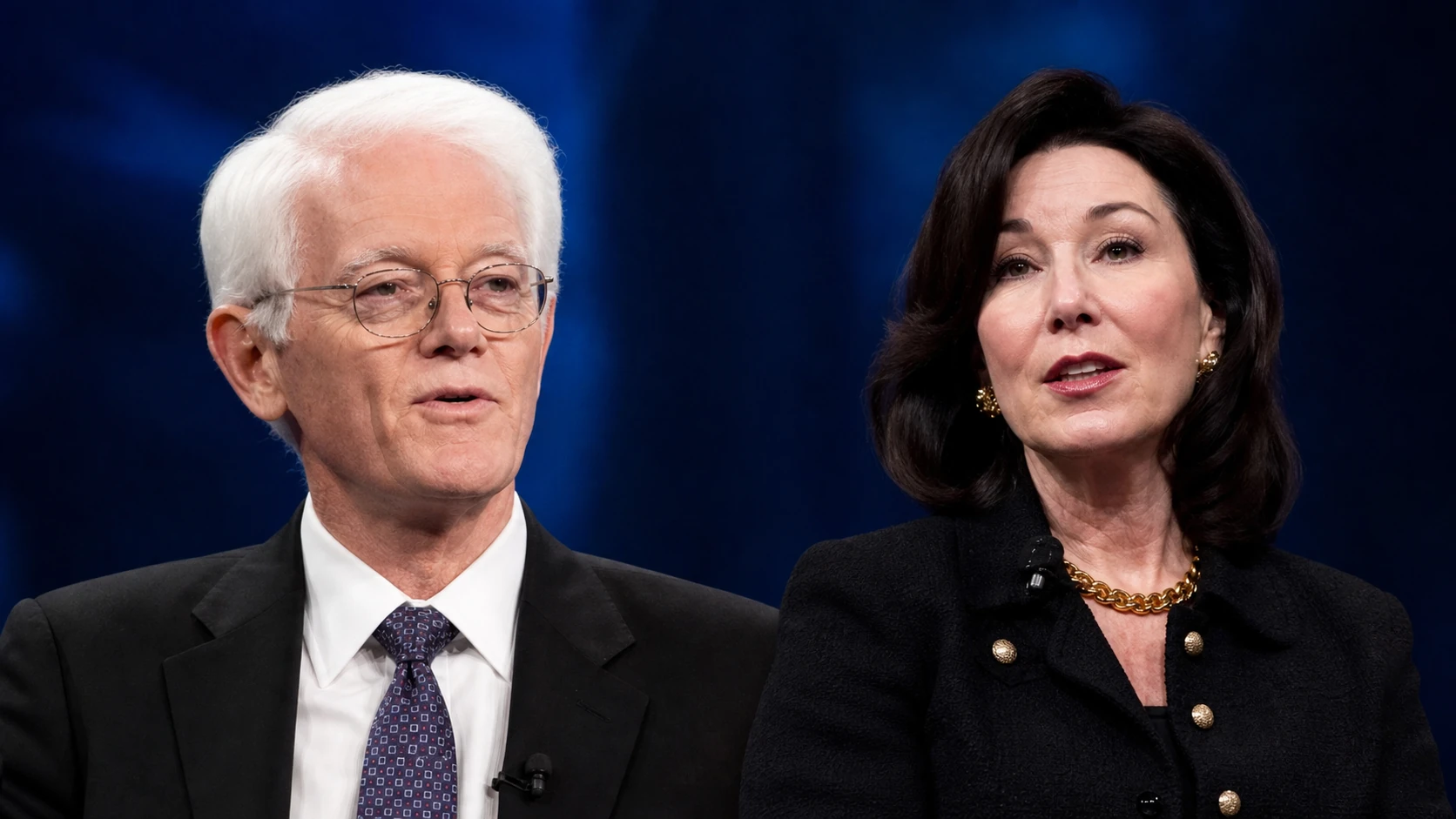
No significant direct relationship between Peter Lynch and Safra Catz is documented in the authoritative public record reviewed. The clearest verified connection is educational: both are Wharton alumni, but from different eras. Lynch is identified by Wharton as WG’68, while Catz is W’83, L’86, meaning she completed her Wharton undergraduate degree about 15 years after Lynch finished his graduate business education.
There is likewise no reliable public evidence establishing them as relatives, spouses, colleagues, business partners, investment collaborators, or mentor and protégé. That finding should not be stretched into a claim that they have never met privately. It simply means the substantial connection sometimes implied when their names appear together online is not supported by the documented record.
Their careers also developed along very different tracks. Lynch became one of the best-known American fund managers through Fidelity’s Magellan Fund, while Catz built her career in investment banking and corporate leadership before spending more than a decade as Oracle’s CEO. As of September 2, 2026, Catz is Oracle’s Executive Vice Chair, while Boston College identifies Lynch as vice chairman of Fidelity Management & Research Company.
Need to know
- Peter Lynch and Safra Catz are not publicly documented as relatives or business partners.
- Their strongest verified common link is Wharton, where Lynch completed his graduate business degree in 1968 and Catz earned her undergraduate business degree in 1983.
- They were not classmates and no documented Wharton-based mentorship or collaboration has been established.
- Lynch’s defining career was in investment management at Fidelity; Catz’s was in investment banking and executive leadership at Oracle.
- Some finance pages can place both names in the same context because “Peter Lynch” is also used in stock-valuation terminology, including on Oracle-related pages. That does not establish any personal involvement by Lynch with Catz or Oracle.
The Wharton connection—and its limits
The most concrete link between the two is the University of Pennsylvania’s Wharton School.
A Wharton profile identifies Peter S. Lynch as WG’68, placing the future Fidelity manager in the school’s graduate business class of 1968. Safra Catz is identified by Wharton as W’83, L’86: she completed her Wharton undergraduate education in 1983 and later earned a law degree from the University of Pennsylvania in 1986.
That chronology matters because it rules out one of the easiest assumptions to make from the shared affiliation. Lynch and Catz did not attend Wharton at the same time. Their business-school milestones were separated by roughly 15 years.
The available record also does not establish that Lynch later mentored Catz, taught her, recruited her, invested alongside her, or worked with her through Wharton. The shared institution is real; a deeper relationship based on it is not publicly documented.
Why their names can appear together online
The pairing can look more meaningful in search results than the underlying evidence warrants.
One reason is that Peter Lynch’s name has become part of the vocabulary of stock analysis. Financial-data sites use terms such as “Peter Lynch Fair Value” for valuation metrics modeled on ideas associated with his investing approach. GuruFocus, for example, maintains an Oracle page labeled “Peter Lynch Fair Value”.
That creates a straightforward way for “Peter Lynch” and Oracle-related material to occupy the same page even when Lynch has no role in Oracle’s management. A 2019 finance article about a Safra Catz Oracle share transaction also included a Peter Lynch-branded Oracle chart, providing an older example of the names co-occurring mechanically in investment content.
This is useful context, but it does not establish the origin of the modern search phrase “Peter Lynch and Safra Catz.” A cluster of pages published in August 2026 focused specifically on the pairing, yet their similar timing and repeated framing make them poor independent evidence of an actual relationship.
The safest conclusion is narrower: search engines and financial publishing can associate the names, but the documented biographies do not reveal a significant direct connection between the two people.
Peter Lynch: Fidelity, Magellan and a research-driven investing career
Peter Lynch became widely known through his management of Fidelity’s Magellan Fund. Fidelity records his tenure as running from 1977 through 1990, a period in which Magellan grew from a comparatively small fund into one of the most prominent vehicles in American investing.
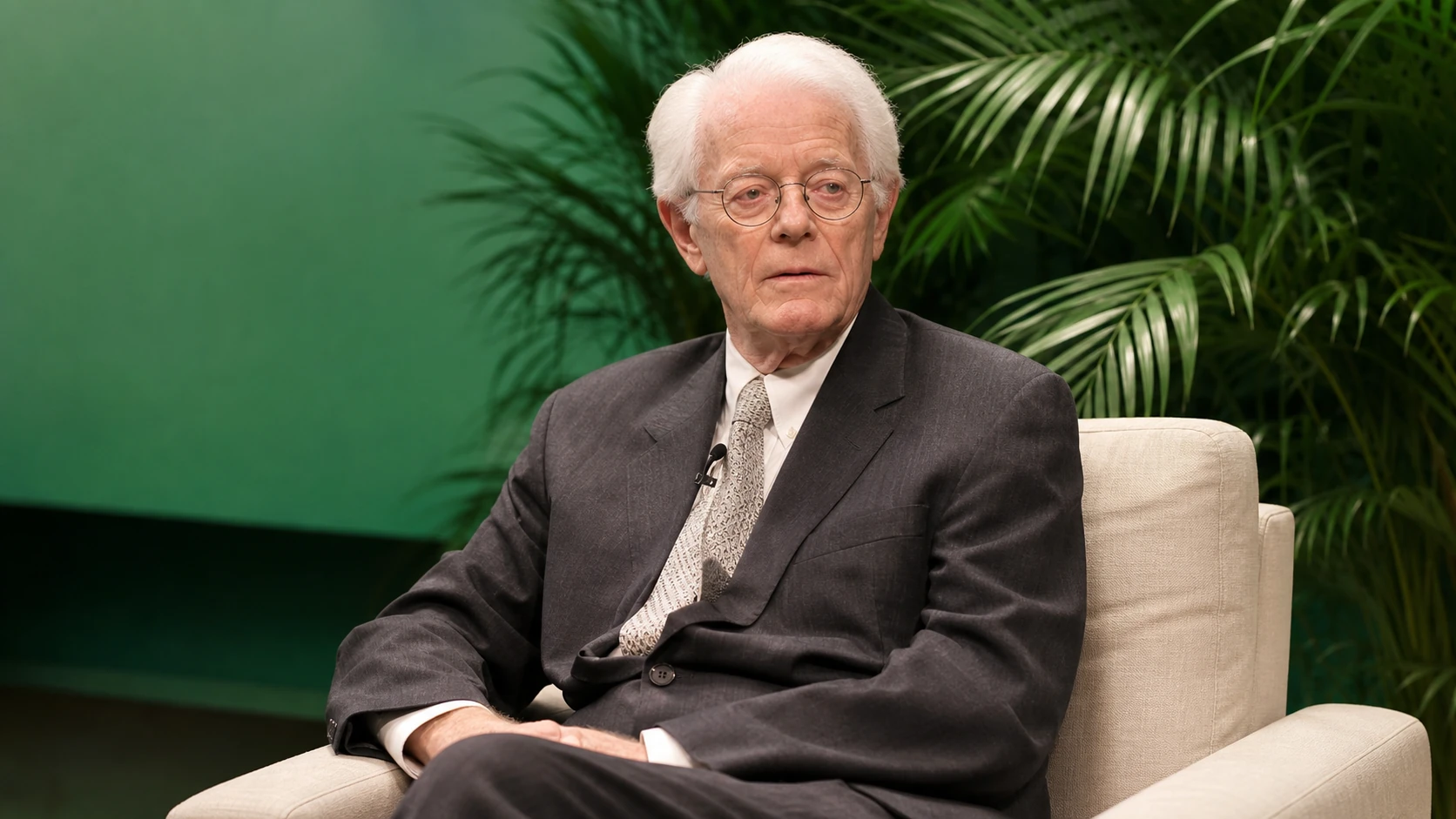
Fidelity’s Magellan fund history lists approximately $20 million in assets at the beginning of Lynch’s tenure and $14 billion at the beginning of successor Morris Smith’s tenure in 1990. Those figures describe the fund’s assets, not Lynch’s personal wealth.
Wharton’s account of his career reports that Magellan produced an average annual return of 29.2% during the Lynch years and underperformed the S&P 500 in only two of those years. That record is central to Lynch’s enduring reputation, but so is the way he described his investment process.
He became closely associated with the idea of looking for opportunities in businesses an investor could understand, often summarized as “invest in what you know.” In practice, his approach was more research-intensive than the slogan can suggest. Wharton’s profile emphasizes his interest in investigating overlooked companies and understanding their businesses rather than simply following fashionable sectors or market narratives.
Lynch also helped carry investment analysis into a much broader public audience through books including One Up on Wall Street, Beating the Street and, with John Rothchild, Learn to Earn.
His famous Magellan tenure ended in 1990. That date is especially relevant to any theory connecting him professionally with Catz: she did not join Oracle until 1999, nine years after Lynch stopped managing Magellan. The chronology therefore does not support the suggestion that his celebrated Fidelity record involved investing under Catz’s Oracle leadership.
That distinction does not prove that Lynch never personally owned Oracle shares at some later point. It simply means there is no basis for turning his Magellan history into evidence of a Lynch-Catz investment collaboration.
In more recent institutional material, Boston College describes Lynch as vice chairman of Fidelity Management & Research Company and treasurer of the Lynch Foundation. He has also continued to discuss investing publicly, including in a long-form interview highlighted by the Lynch Foundation in 2025.
Safra Catz: from investment banking to Oracle leadership
Safra Catz took a different route through finance.
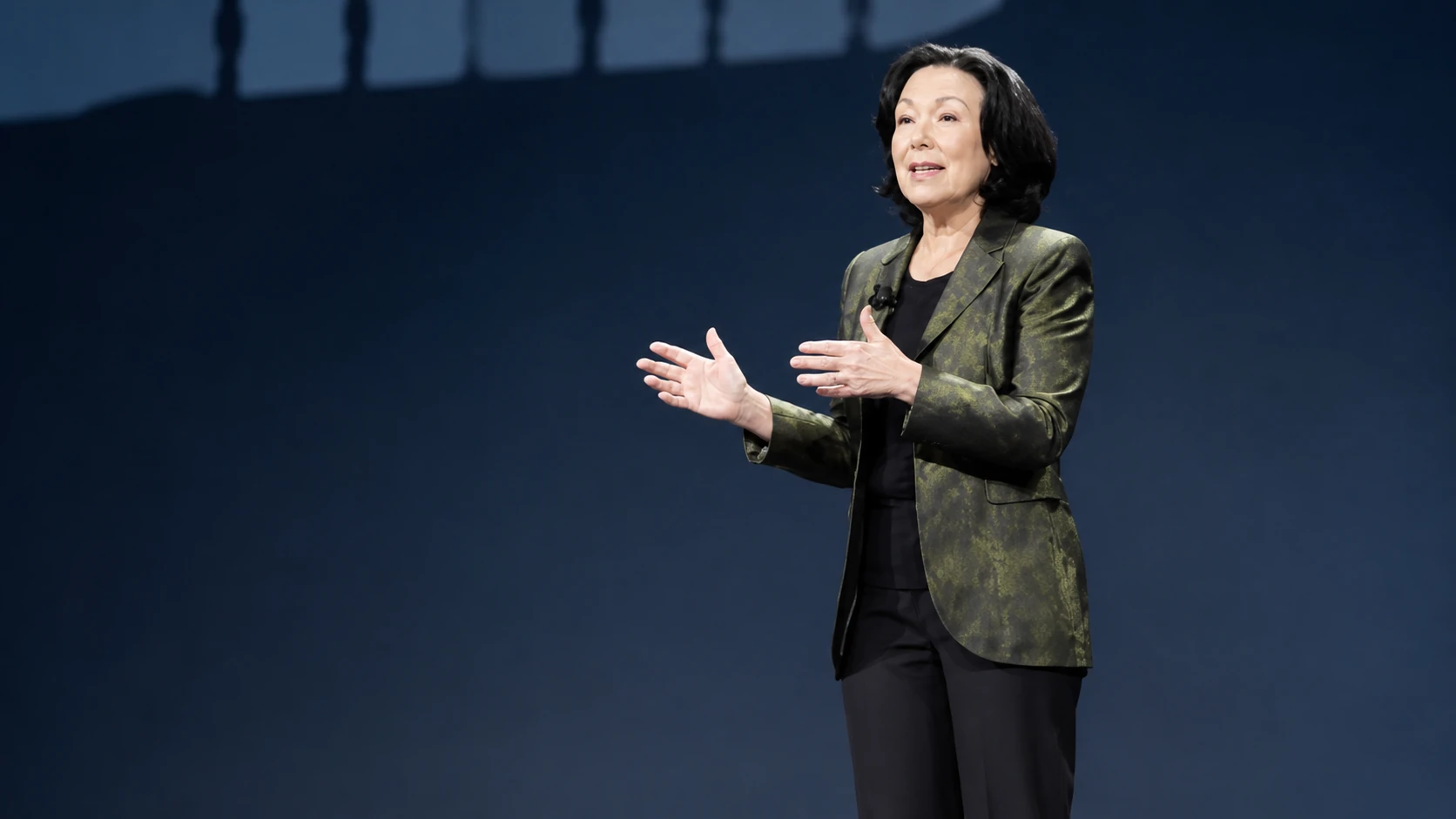
After studying business at Penn and completing her law degree in 1986, she entered investment banking rather than building a legal career. Oracle’s biography records that she became a managing director at Donaldson, Lufkin & Jenrette, commonly known as DLJ, before joining Oracle in 1999.
Her rise inside Oracle brought together finance, operations and dealmaking. She served at different times as president and chief financial officer before being appointed co-CEO with Mark Hurd in September 2014.
Catz ultimately remained in the CEO role for more than a decade. On September 22, 2025, Oracle announced that she would leave the chief executive position and become Executive Vice Chair of the Board, while Clay Magouyrk and Mike Sicilia became CEOs. The change is documented in Oracle’s September 2025 SEC filing.
That title matters because some descriptions have continued to call Catz Oracle’s CEO or have used “Executive Chairman.” Oracle’s own current corporate materials identify her as Executive Vice Chair, which is the more authoritative description as of September 2, 2026.
Catz’s financial background has been particularly important to Oracle’s acquisition-heavy growth strategy. Oracle has specifically credited her finance and mergers-and-acquisitions expertise with helping shape that strategy. One of the company’s landmark transactions, the acquisition of PeopleSoft agreed in 2004, was valued by Oracle at approximately $10.3 billion.
It would be misleading, however, to present that as a transaction Catz personally executed alone. Major acquisitions are corporate actions involving boards, executives, advisers and counterparties. The defensible point is that Oracle itself has described her M&A expertise as a significant part of the company’s strategic development.
Her public-company responsibilities have also expanded beyond Oracle. In July 2026, Catz was elected to the board of Paramount Skydance.
Two influential business careers, but in different roles
The comparison between Lynch and Catz is more useful when it focuses on what they actually did rather than trying to create a partnership that the record does not show.
Lynch’s public identity is fundamentally that of an investor and fund manager. His reputation rests on selecting securities, studying companies and delivering investment performance for Fidelity Magellan.
Catz’s is that of a corporate operator and finance executive. Her career moved from investment banking into executive management, corporate finance and acquisition strategy at one of the world’s largest enterprise-technology companies.
Their Wharton backgrounds give them a genuine institutional point of overlap, and both careers required sophisticated financial judgment. But those similarities sit inside markedly different professional systems: Lynch evaluated businesses largely from the perspective of an investor allocating capital, while Catz spent decades making financial and strategic decisions from inside a corporation.
That distinction is more informative than treating the two as members of a shared business story.
No documented family or professional relationship
There is no reliable evidence in the reviewed public record establishing a family relationship between Peter Lynch and Safra Catz.
Public family information points to separate lives. Penn’s obituary for Carolyn Hoff Lynch identifies Peter Lynch as her husband. Published reporting on Catz identifies Gal Tirosh as her husband. There is no documented marital or familial link connecting Lynch and Catz to one another.
The same conclusion applies professionally. Lynch’s principal career chronology runs through Fidelity and Magellan; Catz’s runs through DLJ and Oracle. No authoritative career history reviewed identifies a joint company, board role, investment partnership, advisory relationship or other substantial collaboration.
It remains possible that two prominent Wharton alumni have crossed paths at an event or through professional circles. Public biographical evidence cannot prove the absence of every private meeting. What it can show is that no significant direct relationship has been established in the records that define their careers.
Conclusion
The meaningful connection between Peter Lynch and Safra Catz is narrower than their repeated pairing online can imply. Both are prominent Wharton alumni with major careers in finance and business, but they studied there in different periods and went on to distinctly different professional paths.
Lynch became known for investment management and the performance of Fidelity Magellan; Catz became one of the most influential corporate finance executives of her generation through Oracle. As of September 2, 2026, there is no authoritative public record establishing them as relatives, colleagues, business partners or investment collaborators. The documented link is Wharton—not a hidden shared career or personal relationship.
