


Princess Charlotte of Wales has no publicly verified personal net worth as of 9 November 2026, despite repeated claims that she is worth approximately $5 billion (£3.2 billion). The widely circulated figure originates from estimates of her economic influence on the United Kingdom, particularly through fashion and retail spending, rather than money or assets she personally owns.
Charlotte Elizabeth Diana was born on 2 May 2015. She is the daughter of William, Prince of Wales, and Catherine, Princess of Wales, and is third in line to the British throne.
At 11 years old, Charlotte has become a familiar presence at royal public appearances. Her clothing choices have also attracted commercial attention, helping explain why financial estimates associated with her name have reached billions.
The important distinction is between the economic activity a public figure may generate and the wealth that individual actually possesses.
The $5 billion estimate originated in 2015
Princess Charlotte’s frequently quoted $5 billion valuation dates back to financial estimates published shortly after her birth.
In September 2015, British consultancy Brand Finance calculated that Charlotte could generate approximately £101 million annually in economic benefits for the UK.
The consultancy also estimated the projected net present value of her future economic contribution at £3.197 billion.
These figures appeared in Brand Finance’s 2015 valuation of the British monarchy.
The larger estimate subsequently circulated in US-dollar terms as approximately $5 billion.
However, Brand Finance wasn’t calculating Charlotte’s personal savings, property holdings or financial investments.
Its assessment concerned commercial economic benefits associated with her public profile.
The distinction is fundamental to understanding the reported figure.
A person can influence billions of pounds in economic activity without personally receiving that money.
For Charlotte, the valuation reflected the potential effects of public interest in a prominent member of the royal family.
What the economic valuation measures
Brand Finance’s calculation used the concept of net present value.
In financial analysis, net present value expresses the estimated current worth of future economic benefits after accounting for the time value of money.
The consultancy’s projection therefore attempted to assess economic contributions expected over an extended period.
It wasn’t a record of money already earned.
Nor did it establish that Charlotte had any legal claim to the predicted economic benefits.
For example, a clothing manufacturer might experience increased demand after a product appears in a photograph of a royal family member.
That additional demand could generate revenue for the manufacturer, its suppliers and retailers.
The person who attracted the attention doesn’t automatically receive the resulting revenue.
The Brand Finance calculation concerned this broader type of economic activity.
It also depended on forecasts. A projected benefit isn’t the same as a financial outcome that has already occurred.
Consequently, the historical £3.197 billion figure is best understood as a consultancy’s estimate of future economic influence.
The Princess Charlotte Effect links royal appearances to fashion sales
Princess Charlotte’s commercial influence is commonly described as the Princess Charlotte Effect.
The term refers to consumer interest generated by her public appearances, particularly when clothing and accessories attract attention.
Charlotte’s public introduction following her birth in May 2015 helped establish the connection between her visibility and children’s fashion.
Contemporary CNNMoney reporting discussed the commercial interest surrounding items associated with the young princess.
The underlying mechanism is straightforward.
A royal appearance receives widespread media coverage. Consumers notice a garment or accessory and may subsequently search for the same item.
That attention can provide substantial publicity for a retailer.
In some circumstances, it may also increase sales.
However, the commercial value of publicity differs from the amount of profit generated.
A retailer’s revenue must cover manufacturing, distribution, staffing and other expenses before producing a profit.
Even when a particular public appearance is associated with additional sales, the financial benefit belongs to the businesses involved.
Charlotte’s influence on consumer behaviour therefore cannot be treated as evidence that she receives the value of those purchases.

Fashion influence remained prominent in 2025
The connection between Charlotte and the fashion industry continued to feature in royal coverage as she grew older.
On 30 April 2025, Us Weekly published an article marking her approaching tenth birthday.
Royal commentator Sharon Carpenter discussed Charlotte’s growing influence on children’s fashion.
Carpenter said that the princess’s impact, commonly called the Charlotte Effect, helped encourage sales.
She also cited an estimate that Charlotte could contribute between £3 billion and £4 billion to the UK economy over her lifetime.
The comments appeared in Us Weekly’s April 2025 report.
The projection described Charlotte’s potential economic value rather than her individual fortune.
In May 2026, InStyle published an article discussing the same £3 billion–£4 billion estimate.
Its coverage drew on Carpenter’s earlier comments.
Although the later publication appeared in 2026, it didn’t establish that Charlotte had acquired billions in personal wealth during the intervening period.
The chronology explains why recent articles can contain substantial financial figures without reporting a new financial development.
Royal family wealth is separate from Charlotte’s personal assets
Princess Charlotte belongs to a family associated with substantial property holdings and established financial institutions.
However, royal family resources aren’t automatically the personal property of every family member.
This distinction is particularly relevant when commercial wealth rankings combine the value of royal estates with estimates of Charlotte’s future inheritance.
The Duchy of Cornwall provides one example.
Prince William became Duke of Cornwall in September 2022, following the accession of King Charles III.
The Duchy generates income for the Duke of Cornwall through its property and commercial interests.
According to the Duchy of Cornwall’s official financial explanation, the Duke receives income from the estate but doesn’t have unrestricted ownership of its capital assets.
Those arrangements don’t establish personal ownership of Duchy property by Charlotte.
The Crown Estate operates under different institutional arrangements, but a similar distinction applies.
Its assets are associated with the Crown rather than being privately owned by individual members of the royal family.
Assigning the value of these institutions to Charlotte would therefore misrepresent her financial position.
Family resources aren’t the same as personal net worth
Personal net worth is generally calculated by subtracting an individual’s liabilities from the value of assets attributable to that person.
Assets may include cash, investments, property or ownership interests in businesses.
Liabilities include financial obligations and debts.
A family’s financial circumstances can influence the resources available to a child, but they don’t necessarily establish what the child personally owns.
Similarly, an expected inheritance isn’t the same as an inheritance already received.
A future transfer may depend on legal arrangements, ownership conditions and events that haven’t occurred.
For Charlotte, assigning a particular amount to an inheritance or private trust would require documentation supporting that specific financial interest.
Her position in the royal family alone doesn’t establish such a valuation.
The same distinction applies to public funding for royal activities.
The Sovereign Grant supports official functions associated with the monarchy. It isn’t equivalent to an individual salary for Charlotte.
These institutional arrangements help explain why the royal family’s overall financial resources cannot be added together to produce an estimate of her personal fortune.
Princess Charlotte received a higher economic estimate than Prince George
Princess Charlotte’s financial comparisons with her older brother, Prince George, are another reason the billionaire claim attracts attention.
In Brand Finance’s 2015 valuation, Charlotte received a higher estimate of economic influence than George.
The consultancy assigned Charlotte an estimated annual contribution of £101 million and a projected net present value of £3.197 billion.
For George, the corresponding figures were £76 million annually and £2.398 billion in projected value.
Both calculations came from the same valuation exercise, making them suitable for comparison within that particular economic model.
The difference reflected the consultancy’s assessment of their respective commercial influence.
Charlotte’s association with children’s fashion was particularly relevant to her projected value.
George, meanwhile, occupies a different position within the royal family.
As Prince William’s eldest child, he is second in line to the throne, ahead of Charlotte.
His place in the succession doesn’t automatically mean that he would generate more consumer spending.
However, the Brand Finance figures don’t answer which sibling has the larger personal fortune.
They concern expected contributions to the economy, rather than the value of assets legally owned by either child.
A higher economic-impact projection therefore doesn’t establish that Charlotte is personally wealthier than George.
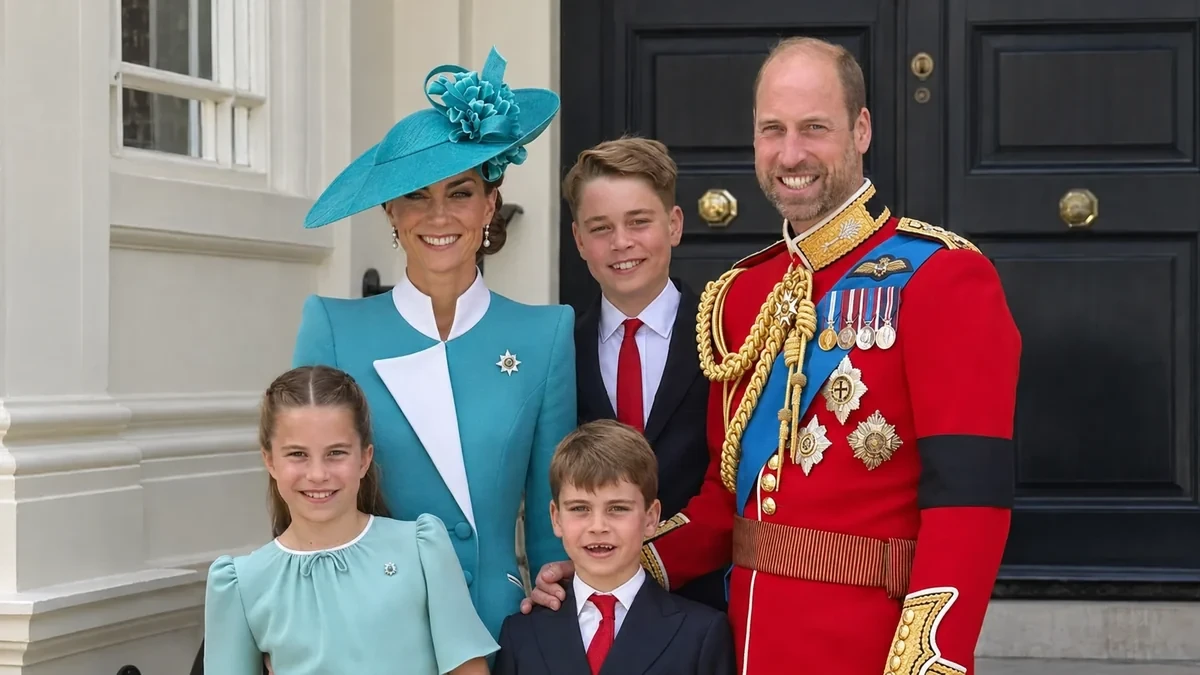
The richest-child title remains a commercial claim
Princess Charlotte has repeatedly appeared in articles describing the world’s richest children.
Some rankings place her first, while others compare her estimated wealth with that of children from prominent entertainment and business families.
The difficulty lies in the different financial definitions used.
One child may be associated with a parent’s business fortune.
Another may have earnings from entertainment or commercial activities.
A third may be assigned an estimated future inheritance.
Charlotte’s widely quoted figure, meanwhile, concerns projected economic influence.
These categories cannot be compared as though they all represent personally owned assets.
For example, a parent’s business might be valued at hundreds of millions of pounds.
That valuation doesn’t establish that the parent’s child owns an equivalent amount.
Likewise, a projected inheritance may never be received in the amount assumed by a ranking.
Some children have identifiable commercial earnings, but revenue from their activities still isn’t necessarily equal to their personal net worth.
A reliable worldwide ranking would need comparable information about the ownership, value and liabilities of each person being assessed.
Without that information, describing Charlotte as the world’s richest child is a claim made by particular publishers rather than an independently established financial fact.
Social media has reinforced the billionaire narrative
The confusion has also appeared in social media coverage.
In February 2025, Newsweek discussed claims circulating online that described Charlotte as exceptionally wealthy.
Its reporting distinguished the large figures associated with her name from estimates of her value to the British economy.
That distinction is important because a frequently repeated number can acquire an appearance of certainty.
A historical commercial projection may be reproduced in later articles, converted into another currency and eventually presented as a statement of personal wealth.
The underlying figure hasn’t necessarily changed.
What changes is the description attached to it.
This helps explain why stories about Charlotte’s supposed fortune continue to appear years after the original economic valuation.
Charlotte’s 2026 position remains unchanged
Princess Charlotte celebrated her 11th birthday on 2 May 2026.
According to the Royal Family’s official biography, she is the daughter of William and Catherine and remains third in line to the British throne.
Her two brothers are Prince George and Prince Louis.
Charlotte’s public profile continues to be shaped by her membership of the royal family rather than an independently established business or professional career.
That position gives her considerable visibility, particularly during major royal occasions and family appearances.
It also explains why the clothing she wears can attract attention from fashion publications and consumers.
However, prominence and earning power are different financial concepts.
A child may be associated with a commercially valuable public image without holding the rights to monetise it or receiving the benefits generated by unrelated businesses.
The financial estimates published under Charlotte’s name don’t establish such personal earnings.
As of 9 November 2026, there is no substantiated new personal-net-worth calculation replacing the historical economic-impact estimates.
The billions frequently associated with Charlotte therefore remain projections of commercial influence rather than a documented valuation of her assets.
Kate Middleton’s reported nickname for Charlotte
Catherine, Princess of Wales, has reportedly used the affectionate nickname “Lottie” for Charlotte.
The nickname was reported following a public encounter in 2019.
It is an informal family name rather than a royal title.
Charlotte’s official name remains Charlotte Elizabeth Diana, and her title is Princess Charlotte of Wales.
The reported nickname has no connection to the financial estimates associated with her public profile.
The Bottom Line
Princess Charlotte’s position in the royal family gives her considerable public visibility, and Brand Finance’s historical estimates placed a substantial value on that influence. However, economic contribution, royal institutional property and possible future inheritance are separate from personal wealth. As of 9 November 2026, the approximately $5 billion figure remains an estimate of economic influence, not a documented fortune owned by Princess Charlotte.
More from instantmag.co.uk.
