


There is no publicly documented direct family, personal or professional relationship between Anne Hathaway and Tom Kennedy, the classic-Hollywood character actor. The verifiable connection behind the two names is more limited: Kennedy appeared in the 1933 Western Man of the Forest, which was directed by Henry Hathaway, not Anne Hathaway.
That distinction matters because the names have increasingly appeared together online in 2026, sometimes under headlines suggesting a hidden Hollywood connection. The historical film credit is real, but there is no confirmed evidence that Anne Hathaway and Tom Kennedy knew each other, worked together or belonged to the same family.
The documented connection is through Henry Hathaway
The strongest historical link comes from the American Film Institute’s record for Man of the Forest. The AFI Catalog lists Henry Hathaway as the director of the film, which was released on July 14, 1933, and includes Tom Kennedy in the cast.
AFI credits Kennedy simply as “Kennedy.” The film, adapted from Zane Grey’s 1920 novel, starred Randolph Scott, Verna Hillie, Harry Carey and Noah Beery. Kennedy’s part was a supporting one within a Western built around land disputes, kidnapping, murder and a corrupt sheriff.
That is the concrete Hathaway-Kennedy link: Tom Kennedy worked on a Henry Hathaway film.
It does not establish a connection to Anne Hathaway. No reliable family record cited in the available material establishes that Anne Hathaway and director Henry Hathaway were related, either, so the shared surname should not be treated as proof of kinship.
Tom Kennedy was also in the 1926 version
The story becomes more interesting when the earlier adaptation is considered.
Seven years before Henry Hathaway’s version, Paramount released another Man of the Forest. According to the AFI record for the 1926 film, it was directed by John Waters and released on December 27, 1926.
Tom Kennedy was already part of that production. AFI credits him as the sheriff.
That detail corrects a claim found in some recent articles that Kennedy’s involvement began with the 1933 remake. In fact, he appeared in both versions: as the sheriff in the silent 1926 film and again in the 1933 sound adaptation.
The two films therefore provide a genuine piece of Kennedy’s screen history, but neither creates a professional link to Anne Hathaway.
Which Tom Kennedy is being discussed?
The name also creates a second source of confusion.
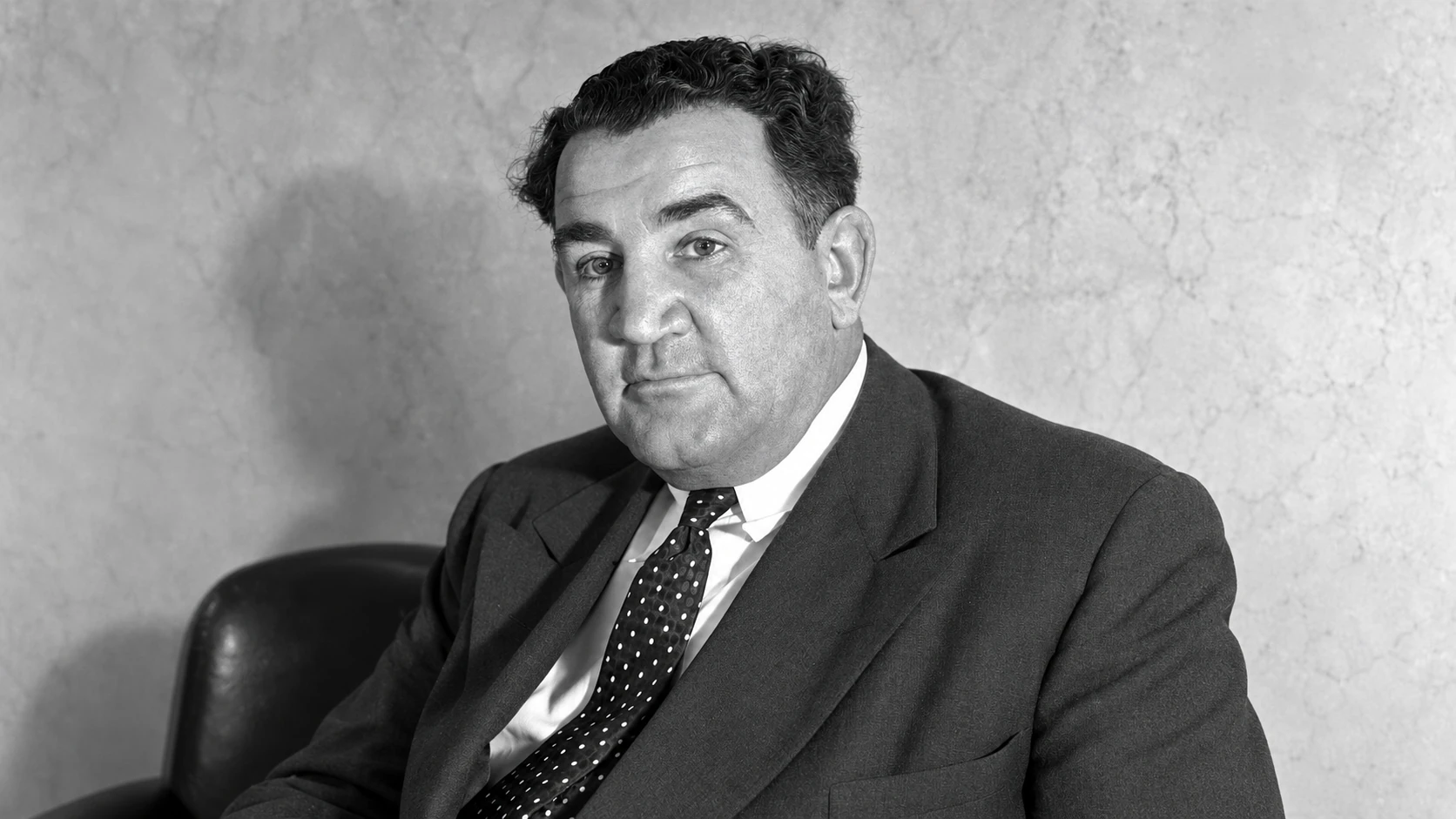
The Tom Kennedy associated with Man of the Forest was the classic-film actor generally identified in reference databases as Thomas Aloyisus Kennedy, with reported life dates of 1885 to 1965. He worked during the silent and early sound eras of American cinema.
He should not be confused with the later television personality Tom Kennedy. The Television Academy identifies that Tom Kennedy as James Edward Narz, born in 1927. He adopted the professional name Tom Kennedy in 1957 and became known for hosting game shows including You Don’t Say!, Name That Tune and Password Plus.
The two men shared a professional name but were different people with different careers.
That distinction is especially important with older film records, where name-based databases can sometimes combine credits belonging to more than one person.
Was Tom Kennedy’s 1933 character Sheriff Blake?
There is a small but genuine disagreement in the surviving reference material.
AFI’s 1933 cast listing credits Tom Kennedy only as “Kennedy.” Its synopsis includes a corrupt sheriff as part of the story but does not identify Kennedy’s role there as “Sheriff Blake.”
By contrast, IMDb’s full cast listing for the 1933 film identifies Kennedy’s character as Sheriff Blake, and other secondary entertainment databases use the same name.
The safest way to describe the credit is therefore straightforward: Tom Kennedy appeared in the film; AFI lists his credit as “Kennedy,” while IMDb and some other databases identify the character as Sheriff Blake.
The disagreement has no bearing on the larger Anne Hathaway question, but it is useful because several recent articles present “Sheriff Blake” as though every source uses that wording.
Who was Tom Kennedy?
Tom Kennedy belonged to the generation of American character actors who moved between silent films and the sound era, often appearing in supporting rather than leading roles.
His appearances in both versions of Man of the Forest offer a clear example of that continuity. The 1926 adaptation was silent and directed by John Waters; the 1933 version was a sound Western directed by Henry Hathaway. Kennedy’s presence in both places him on either side of one of Hollywood’s major technological transitions.
Some online filmography databases attach very large numbers of titles to “Tom Kennedy,” but those totals need care. At least one AFI person-level listing contains credits dated well after the classic actor’s reported 1965 death, indicating that records for different people named Tom Kennedy have been grouped together. A precise career total should therefore not be presented without resolving those identities title by title.
For this story, the individual AFI film records are more useful than a raw database count: they securely place Kennedy in both the 1926 and 1933 versions of Man of the Forest.
Anne Hathaway’s career belongs to a very different era
Anne Hathaway’s film career began decades after Kennedy’s.

The Academy of Motion Picture Arts and Sciences identifies The Princess Diaries in 2001 as her feature-film debut. She later received an Academy Award nomination for Rachel Getting Married and won Best Supporting Actress for her performance as Fantine in Les Misérables. The Academy’s official record of the 2013 ceremony confirms that win.
Her career has remained active into 2026. The Devil Wears Prada 2, in which she returned as Andy Sachs, was released on May 1, 2026, according to 20th Century Studios.
Disney also inducted Hathaway as a Disney Legend on August 16, 2026. Later in the year, she starred as Verity Crawford in Verity, which Amazon MGM says opened worldwide on October 2, 2026.
The timeline makes the absence of a professional overlap with the classic-film Tom Kennedy unsurprising. Hathaway’s feature career began in 2001, decades after Kennedy’s reported death in 1965.
Why are Anne Hathaway and Tom Kennedy appearing together online?
A group of articles published in September 2026 began pairing the two names and explaining the connection through Henry Hathaway’s 1933 film.
The basic film-history fact is sound: Tom Kennedy did appear in a movie directed by Henry Hathaway. What remains uncertain is why that archival fact became associated specifically with Anne Hathaway in modern searches.
Claims that an algorithm automatically confused Anne Hathaway with Henry Hathaway, or that a sudden search spike triggered the trend, have not been backed by platform data or a documented statement from a search company.
The earliest exact-name explainer identified in the available material was published on September 5, 2026, but that only shows that the article existed by then. It does not establish who first created the query, why people began searching it or whether a search engine played any role.
The responsible conclusion is simpler: a genuine Tom Kennedy-Henry Hathaway film credit exists, and recent pages have used it to explain why Anne Hathaway’s name appears beside Kennedy’s. The origin of that modern pairing is still unclear.
Are Anne Hathaway and Tom Kennedy related?
There is no documented direct family relationship between Anne Hathaway and the classic-film actor Tom Kennedy.
The same caution applies to Anne Hathaway and Henry Hathaway. A shared surname is not enough to establish family history, and no reliable genealogical record cited here confirms that the actor and the director were relatives.
Did Anne Hathaway and Tom Kennedy ever work together?
No shared screen or production credit has been identified.
Tom Kennedy’s documented Man of the Forest appearances date to 1926 and 1933. Anne Hathaway’s feature-film career began in 2001. The relevant connection is therefore historical and indirect: Tom Kennedy worked with the Hathaway name through director Henry Hathaway, not through Anne Hathaway herself.
For readers encountering “Anne Hathaway and Tom Kennedy” as though it describes a forgotten collaboration or family tie, that is the key distinction. The 1933 film credit is real; the direct relationship is not publicly established.
