

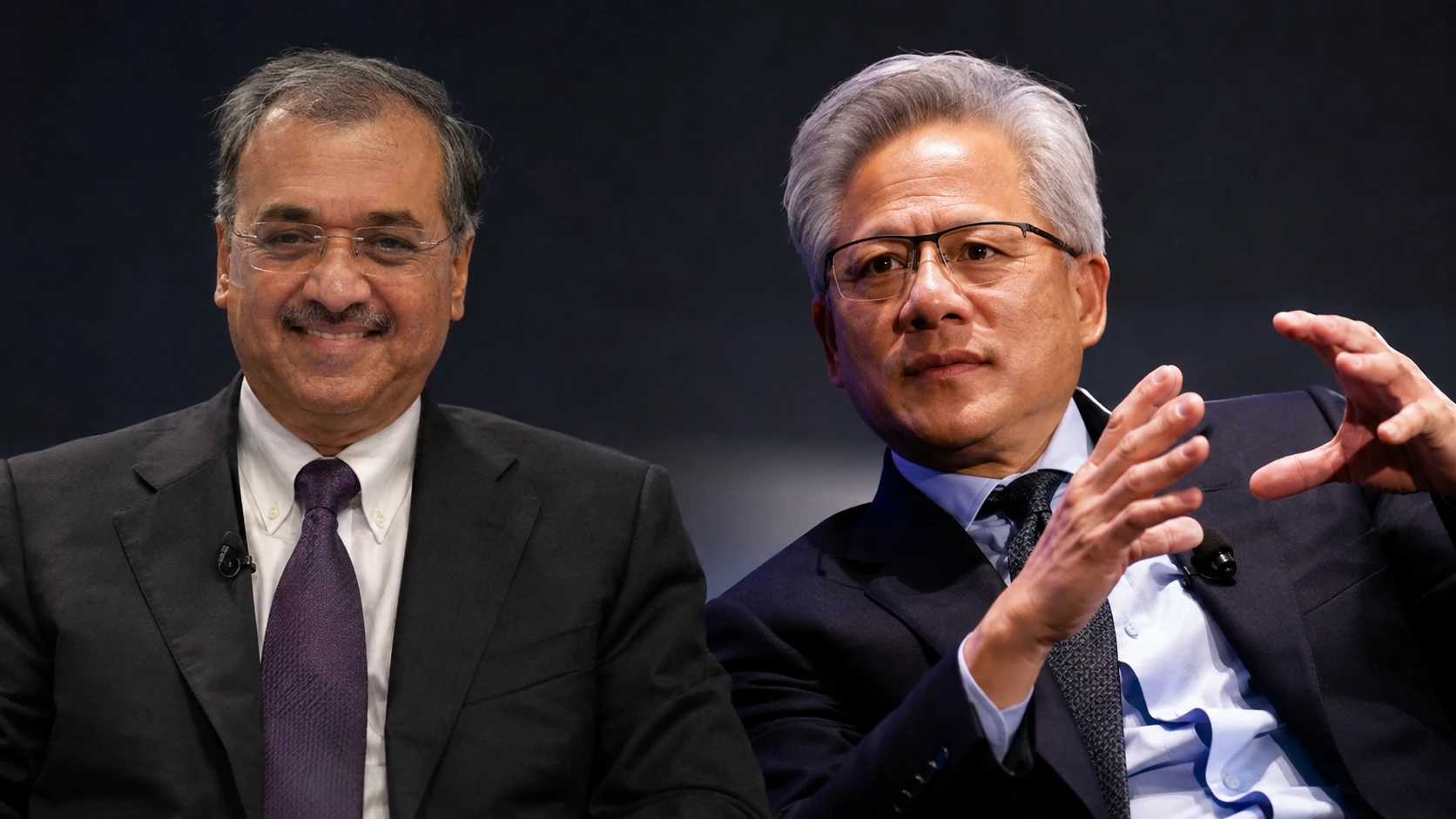
Dilip Shanghvi and Jensen Huang are founders of two very different global businesses. Shanghvi built Sun Pharmaceutical Industries and, as of September 3, 2026, serves as its Executive Chairman. Huang co-founded NVIDIA in 1993 and remains its President and Chief Executive Officer. No direct business or personal relationship between the two was identified in the authoritative public sources reviewed, so the useful comparison is not about a partnership but about two contrasting founder-led careers.
Shanghvi’s path runs through pharmaceuticals, geographic expansion and major acquisitions. Huang’s runs through semiconductors, graphics processing and the development of a hardware-and-software computing platform that became central to modern AI infrastructure. Their current positions also differ: Shanghvi moved from Managing Director to Executive Chairman in September 2025, while Huang continues to run NVIDIA as CEO more than three decades after its founding.
Key takeaways
- Dilip Shanghvi founded Sun Pharma in 1983 and is now its Executive Chairman.
- Jensen Huang co-founded NVIDIA in 1993 and remains its President and CEO.
- No authoritative evidence reviewed establishes a direct business or personal relationship between Shanghvi and Huang.
- Shanghvi scaled Sun Pharma through product focus, international expansion and acquisitions; Huang helped build NVIDIA around graphics processors, CUDA and accelerated computing.
- On Forbes’ same-date 2026 billionaire ranking, Huang’s estimated fortune was substantially larger, but both figures were third-party estimates rather than audited personal wealth.
Dilip Shanghvi and Jensen Huang profile summary
| Detail | Dilip Shanghvi | Jensen Huang |
|---|---|---|
| Current role | Founder and Executive Chairman, Sun Pharma | Co-founder, President and CEO, NVIDIA |
| Company founded | Sun Pharmaceutical Industries, 1983 | NVIDIA, 1993, with Chris Malachowsky and Curtis Priem |
| Main industry | Pharmaceuticals | Semiconductors and accelerated computing |
| Education | BCom, University of Calcutta, according to an Ashoka University institutional profile | BSEE, Oregon State University; MSEE, Stanford University |
| Defining career milestones | Sun Pharma IPO; Ranbaxy acquisition; global specialty-pharma expansion | GPU development; CUDA; growth of accelerated computing and AI infrastructure |
| Current relevance in 2026 | Executive Chairman while Sun Pharma pursues its pending Organon transaction | Serving CEO as NVIDIA reports rapid growth in its data-center business |
Dilip Shanghvi: building Sun Pharma from a narrow product focus
Sun Pharma says it was established in 1983 with five psychiatry products and a two-person marketing team. Its first manufacturing facility was in Vapi, Gujarat. That deliberately narrow beginning matters because Shanghvi has continued to describe focus as an important part of the company’s development.
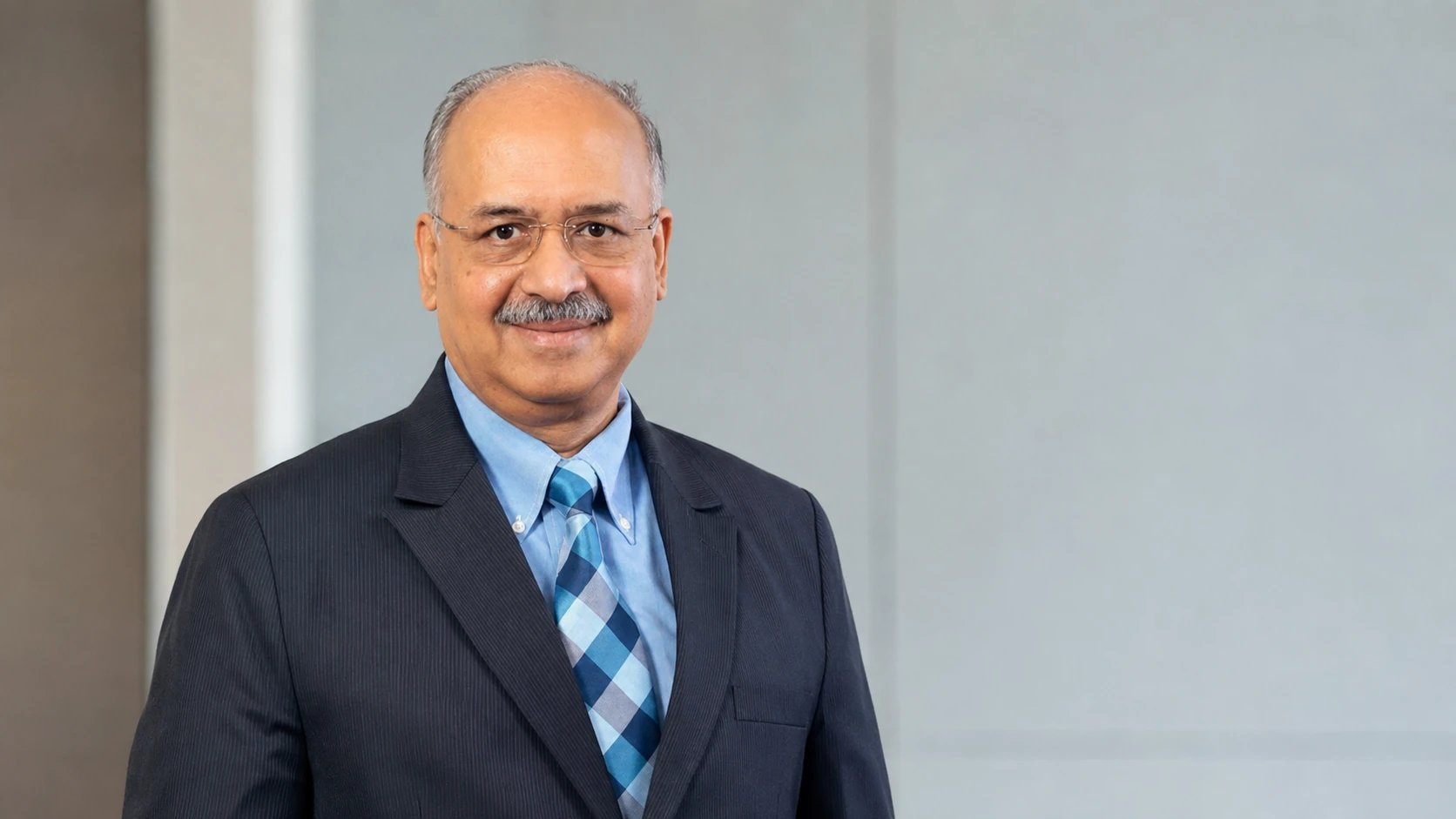
In a 2025 McKinsey interview, Shanghvi discussed the challenge of competing with larger companies while remaining flexible enough to find opportunities they might overlook. He also described an incremental approach to risk: Sun may move ahead when it understands much, but not necessarily all, of an opportunity, provided it can continue learning and survive the downside if assumptions prove wrong.
The company’s 1994 initial public offering was an important financial turning point. In a 2023 interview, Shanghvi called the public issue Sun’s “first major turning point” because the new capital allowed it to accelerate growth. The IPO was followed by years of expansion into additional products, markets and acquisitions.
One of the largest steps came with Ranbaxy Laboratories. Sun and Ranbaxy announced an all-stock transaction on April 6, 2014, valued at about $4 billion. The distinction between announcement and completion is important: Sun says the merger was completed on March 25, 2015. That transaction significantly expanded Sun’s scale and international reach.
Shanghvi’s public standing extended beyond the company. The Government of India’s 2016 Padma Awards records list “Shri Dilip S Shanghvi” as a recipient of the Padma Shri in Trade & Industry.
A founder who has changed roles without leaving the company
Older profiles still describe Shanghvi as Sun Pharma’s Managing Director, but that title is now out of date. According to Sun Pharma’s 2025–26 annual report, he stepped down as Managing Director effective September 1, 2025. Kirti Ganorkar became Managing Director, while Shanghvi began a five-year term as Executive Chairman running through August 31, 2030.
That transition separates operational management from Shanghvi’s continuing strategic role. Sun Pharma’s FY2026 consolidated figures show the scale of the business he now chairs: revenue from operations was ₹584,620 million, with net profit after minority interest of ₹114,794 million and research-and-development expenditure of ₹35,540 million.
His current relevance is also tied to Sun Pharma’s proposed acquisition of Organon. In April 2026, Sun agreed to acquire Organon for $14 per share in cash in a transaction carrying an enterprise value of $11.75 billion, according to the company’s transaction filing.
The deal had not closed as of September 3, 2026. Organon shareholders approved the merger agreement on July 23, but the company’s subsequent SEC filing said other closing conditions remained and that completion was expected in early 2027. Describing Organon as a company Sun Pharma has already acquired would therefore be premature.
Jensen Huang: from engineering to NVIDIA
Jensen Huang, whose formal name appears as Jen-Hsun Huang in NVIDIA filings, followed a more technical route into business leadership. NVIDIA’s 2026 proxy statement filed with the SEC confirms that he earned a bachelor’s degree in electrical engineering from Oregon State University and a master’s degree in electrical engineering from Stanford University.
Before NVIDIA, he worked at AMD and LSI Logic. Huang later described those experiences as helping shift his attention from deciding only what product to build toward understanding how an organization could reliably build it.
He co-founded NVIDIA with Chris Malachowsky and Curtis Priem on April 5, 1993. The company’s early years were not a straight line upward. An Oregon State profile recounts Huang’s description of NVIDIA coming close to failure only a few years after launch as memory economics changed and competition intensified in 3D graphics. The company had to rethink its technical direction rather than simply continue its original approach.
Another detail from Huang’s Oregon State recollections illustrates how he frames complex problems. He credited professor Donald Amort’s habit of using approximate, round-number calculations with teaching him to keep the larger problem in view. Huang said people at NVIDIA later referred to the practice as “CEO math.”
GPU computing, CUDA and the shift beyond graphics
NVIDIA’s defining technological story began with graphics but expanded well beyond it. The company dates its major GPU milestone to 1999. A graphics processing unit, or GPU, was originally designed to handle the large number of parallel calculations needed to render computer graphics efficiently.
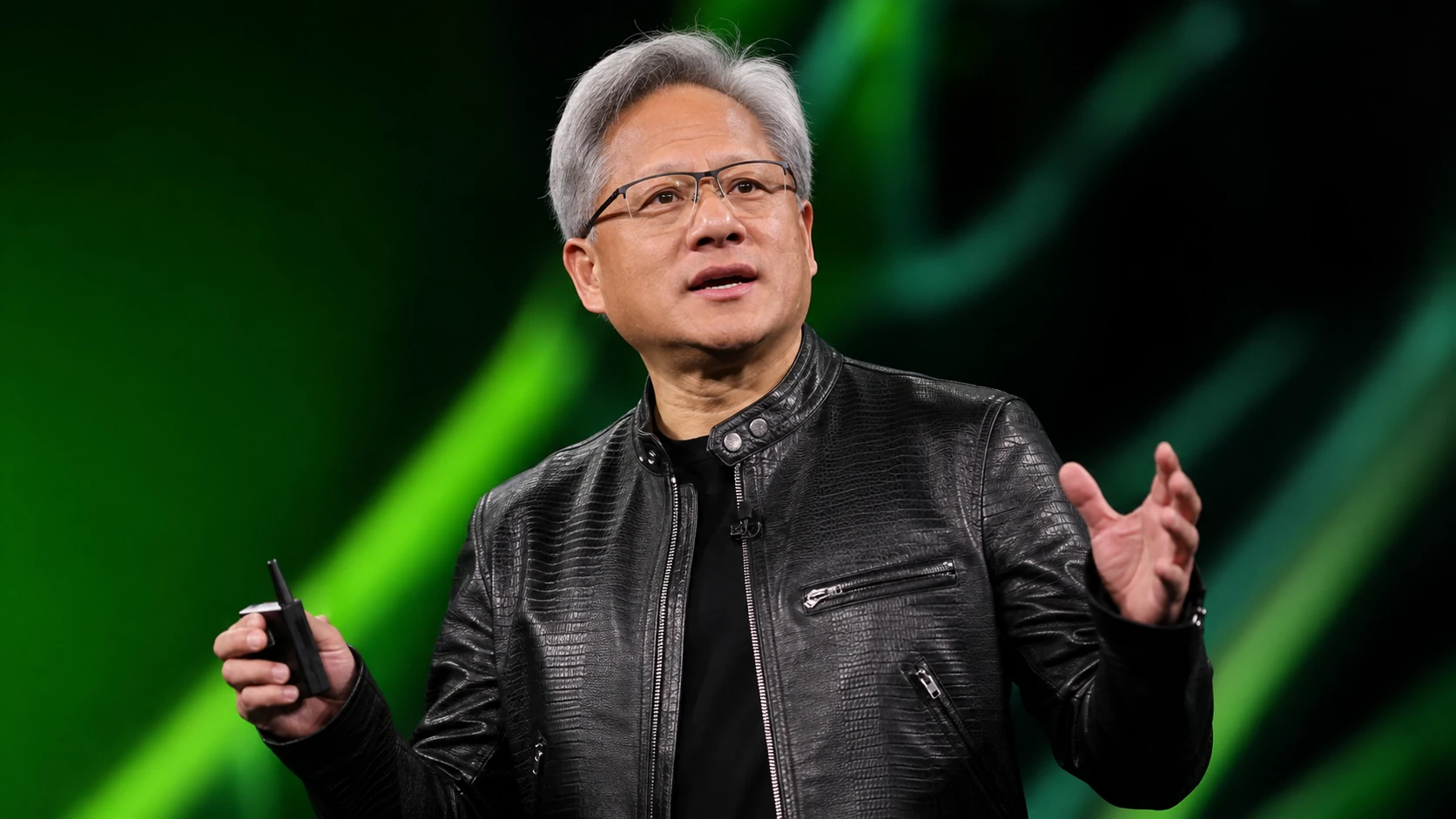
The more consequential shift for Huang’s later career came when NVIDIA began treating that parallel-processing capability as useful for general computation as well. NVIDIA introduced CUDA in 2006. Its current CUDA programming documentation explains that the platform allowed developers to apply GPU processing power to non-graphics computational workloads.
That software layer helped make NVIDIA’s chips useful to researchers and developers in fields far beyond gaming. In 2012, GPUs played a central role in training AlexNet, a neural network whose ImageNet performance became an important milestone in deep learning. NVIDIA itself presents that event as a key moment in the development of modern AI computing; the broader significance should be understood as part of the company’s own historical framing rather than as a neutral corporate claim taken in isolation.
Huang’s long tenure means he has remained in charge throughout these shifts. NVIDIA’s SEC proxy states that he has served as President, CEO and a director since the company’s inception.
Why Huang remains central to NVIDIA in 2026
Unlike Shanghvi, who moved from Managing Director to Executive Chairman, Huang has not stepped away from the chief executive role. His continued position matters because NVIDIA is still undergoing rapid expansion around accelerated computing and AI data-center infrastructure.
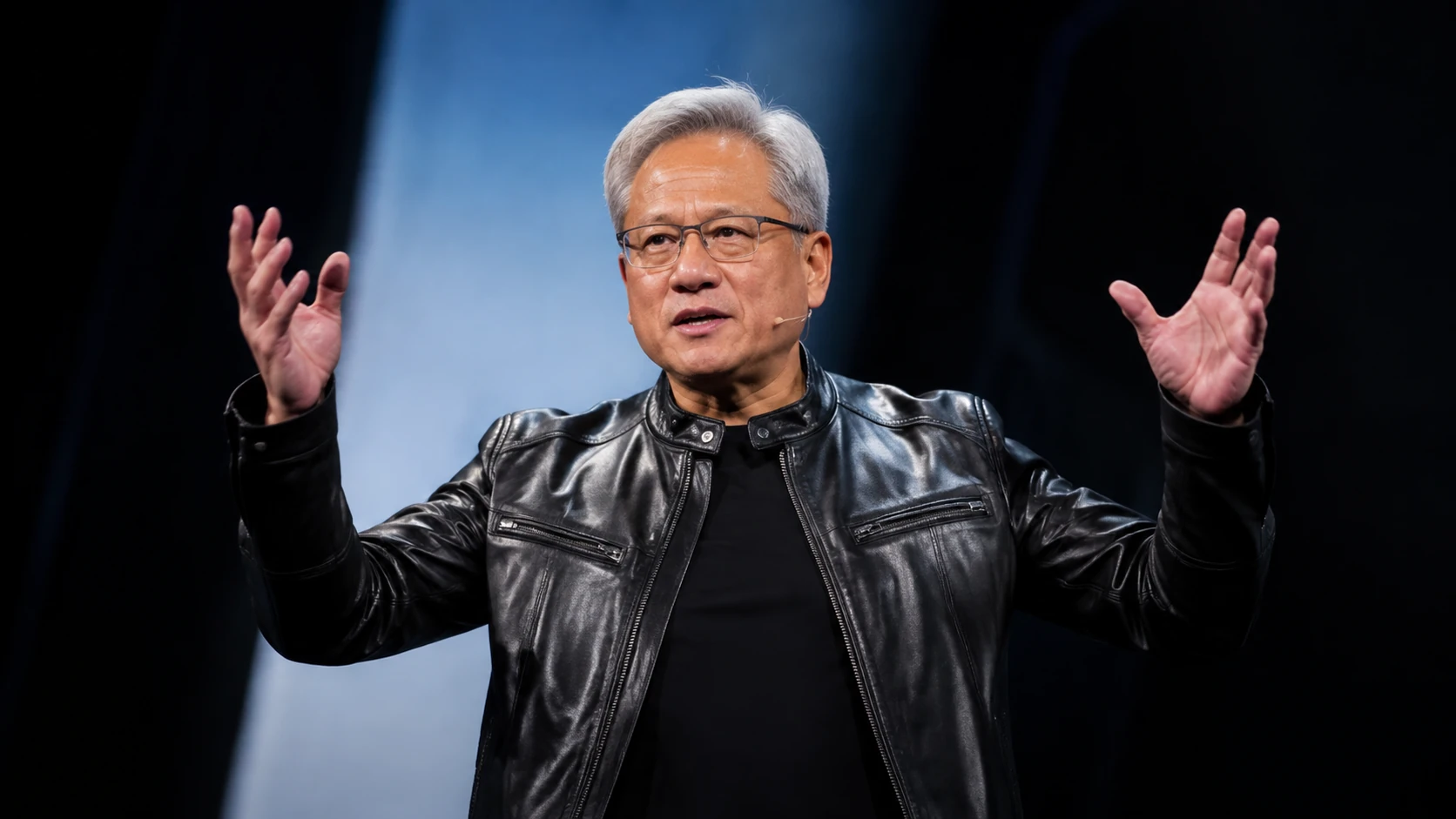
In results filed with the SEC on August 26, 2026, NVIDIA reported second-quarter fiscal 2027 revenue of $96.2 billion, up 106% from a year earlier. Data Center revenue reached $89.0 billion, up 117% year over year.
Those figures do not prove that every part of NVIDIA’s growth can be reduced to AI demand, but they show how heavily the company’s current scale is concentrated in data-center computing. Huang therefore remains not simply a founder associated with NVIDIA’s early history but its serving chief executive during another major phase of expansion.
His industry recognition includes the Semiconductor Industry Association’s Robert N. Noyce Award, which he received in 2021. The association describes it as its highest honor.
Two very different approaches to building global companies
The strongest comparison between Dilip Shanghvi and Jensen Huang lies in how their companies developed rather than in any direct relationship between the two men.
Sun Pharma operates in a tightly regulated pharmaceutical industry where growth depends on drug portfolios, manufacturing, regulatory approvals, geographic reach and the integration of acquired businesses. Shanghvi’s career reflects that environment. Sun began with a small, specialized product portfolio, raised public capital, expanded across markets and used acquisitions—including Ranbaxy and the proposed Organon transaction—to increase its scale.
NVIDIA’s trajectory developed around a different kind of platform. Huang helped build first around computer graphics, then around programmable GPUs and CUDA, creating an ecosystem in which the same underlying parallel-computing architecture could be used for scientific computing, machine learning and eventually large-scale AI systems.
Their training also reflects the distinction. Shanghvi’s documented educational background is in commerce, while Huang trained as an electrical engineer. That difference should not be treated as a simple explanation for either company’s success, but it does match the industries in which each founder built his career.
Their 2026 governance roles provide another contrast. Shanghvi retains influence as Executive Chairman while another executive holds the Managing Director position. Huang remains both founder and CEO, continuing to hold direct responsibility for NVIDIA’s executive leadership.
Dilip Shanghvi and Jensen Huang net worth
Jensen Huang is substantially wealthier than Dilip Shanghvi according to Forbes’ 2026 estimates, but the comparison needs a common date because billionaire rankings move with share prices and exchange rates.
Forbes’ 2026 World’s Billionaires ranking used market prices and exchange rates from March 1, 2026. On that common basis, it estimated Huang’s fortune at $154 billion and Shanghvi’s at $25.6 billion.
More recent Forbes figures were higher for both men, but they were recorded at different times and therefore should not be used to calculate a precise live wealth gap. Forbes’ real-time list showed Huang at $196.2 billion at 11:55 a.m. EDT on September 3, 2026, while the latest indexed Shanghvi figure available from Forbes was $27.2 billion as of September 1.
These numbers are estimates, not audited personal balance sheets. Company revenue, market capitalization, transaction value and regulatory share-ownership figures are different concepts and should not be added together to produce a personal fortune.
Are Dilip Shanghvi and Jensen Huang business partners?
No direct business partnership between Dilip Shanghvi and Jensen Huang was identified in the authoritative sources reviewed through September 3, 2026.
That wording is deliberately limited. An absence of documented evidence is not proof that the two have never met or interacted. What can be said with confidence is that their major public careers are attached to separate companies in separate industries, and there is no established joint enterprise that explains the paired search on its own.
Their connection is therefore best understood as comparative: both are billionaire founders who remained influential inside businesses they started decades ago, but their companies, industries and leadership structures developed in markedly different ways.
Why their careers still matter
Shanghvi’s career shows how a founder can move from building a narrowly focused pharmaceutical company into overseeing a large global organization and eventually shift from day-to-day managing authority into an executive-chairman role. His own interviews emphasize focus, incremental learning and the importance of managing downside risk rather than presenting growth as a sequence of effortless wins.
Huang’s career presents a different kind of continuity. He has remained CEO while NVIDIA repeatedly repositioned the usefulness of its core computing technology—from graphics to programmable GPU computing and, more recently, the infrastructure used in large-scale AI systems. His documented recollections of NVIDIA’s early difficulties are a useful reminder that the company’s current scale was preceded by periods when its direction had to be reconsidered.
Neither story needs exaggerated founder mythology to be significant. The public record already provides a clear contrast between two long-serving company builders working under different technological, commercial and regulatory conditions.
Conclusion
Dilip Shanghvi and Jensen Huang are not known as partners or collaborators. They are better understood as two founders whose careers offer sharply different examples of how long-term influence can develop inside a global company.
As of September 3, 2026, Shanghvi is guiding Sun Pharma as Executive Chairman while the company works toward a major pending acquisition. Huang remains NVIDIA’s President and CEO as its data-center business expands at extraordinary scale. Their industries, training and methods differ, but both remain closely associated with companies they helped create decades earlier—a level of founder continuity that makes the comparison more useful than the paired names alone might suggest.
